 Mochi Isle
 Beavers and dams · Reed WetlandScience for kids
Why do beavers build dams?
In short: Beavers pile sticks, stones and mud across streams to hold back water into ponds, which keeps their homes safe. The dams change local water levels and create new wetlands that help many living things, though they can also flood trees, farms or roads.
How it works
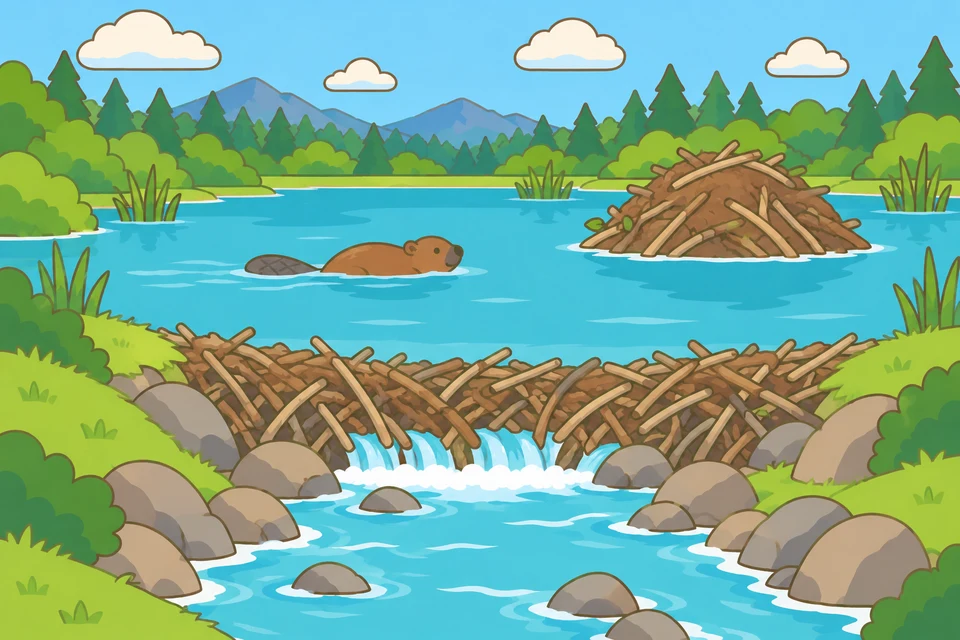
Beavers are large rodents that live in North America and in northern parts of Europe and Asia. Their big front teeth are very sharp and never stop growing. They gnaw down small trees, drag branches into a stream and pile them up with mud, layer by layer, until they have a dam.
Beavers do not actually live in the dam. In the pond it creates, they build a home called a lodge, made of sticks and mud, with an underwater entrance. Deep water keeps predators out, and in winter they can reach branches stored under the ice.
A dam slows the stream and raises the water, soaking the land around it into a new wetland. Frogs, fish, water birds and insects move in, and more water soaks into the ground. But flooded trees die, and nearby farmland or roads can end up under water.
Where to see it in New Zealand
There are no wild beavers in New Zealand. In the forest streams of Canada and the United States, beaver dams are a familiar sight, and the beaver is a national symbol of Canada. Parts of Britain and Europe have returned beavers to the wild to help restore wetlands.
Try it together
In a sandpit, or beside a small trickle from a garden hose, build a mini dam from twigs, stones and mud. Watch how the water behind it deepens and spreads sideways. When you have finished, take the dam apart so the water can flow again.
Kids also ask
Do beavers live inside their dams?
No. The dam's job is to hold back water and make a pond. A beaver's real home is a lodge of sticks and mud built in the pond, with an underwater entrance that keeps predators out.
Why are beavers' teeth orange?
The front of a beaver's front teeth contains iron, which makes them orange and extra tough. The teeth keep growing all its life, and chewing wood every day keeps them worn down to the right length.
Are beaver dams good or bad?
For nature they are often helpful, creating wetlands, homes for wildlife and slowing floods. For people nearby, flooded farms, roads and trees can be a real problem, so communities look for ways to live alongside beavers.
In the game, “Beavers and dams” is a nature card on Reed Wetland.
Your child finds this card by reaching the right place or meeting the right weather on the island, and lights it up by answering the question on the back. Tap the button below and the game shows your child which island it is on and how to find it. Mochi Isle is a browser learning game for ages 5 to 18; the main island and the daily lesson are free.
Find “Beavers and dams” on the island ↗ All cards from Reed Wetland