 Mochi Isle
 Algal blooms · Reed WetlandScience for kids
Why does lake water suddenly turn green?
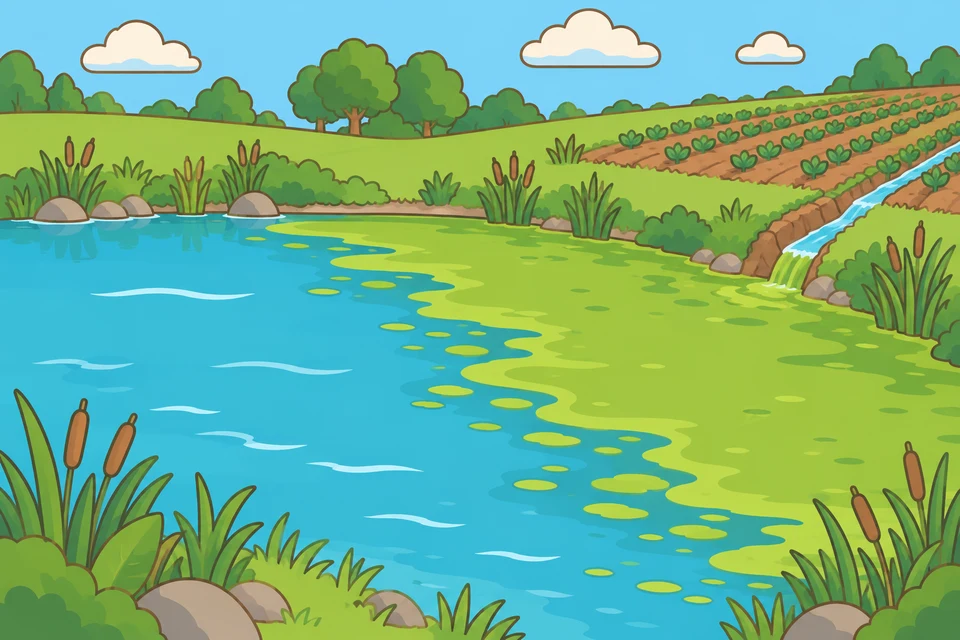
In short: When water gets too many nutrients and the weather is warm, sunny and calm, algae can multiply fast, turning the water green or forming a scum. This is an algal bloom. Some blooms harm water quality, and some make toxins dangerous to people and dogs.
How it works
Algae are simple living things that use sunlight to make food, as plants do. Many are so tiny you need a microscope to see them. Normally they are the base of the food chain in water, and they make oxygen. Only when conditions are too good do they grow out of control.
Nitrogen and phosphorus from fertiliser, sewage and animal dung are like a feast for algae. Rain washes these nutrients into rivers and lakes. Add a warm, sunny summer and slow-moving water, and algae can multiply so quickly that the water changes colour within days.
Big blooms cause trouble. Thick algae block sunlight from plants below. When the algae die and rot, the rotting uses up oxygen in the water, and fish can suffocate. Some blue-green algae, which are really a kind of bacteria, make toxins that harm people and pets.
Where to see it in New Zealand
Some New Zealand lakes and rivers get algal blooms in summer, and the Rotorua lakes have had them many times. In some rivers, dark, leathery mats of algae grow on the stones of the riverbed, and some of them are toxic. Dogs are attracted to them, and some have died after eating them, so councils post warnings at risky spots.
Try it together
With an adult's help, fill two jars with garden-pond water and put on the lids. Put one on a sunny windowsill and one in a dark cupboard. After one or two weeks, which is greener? Never drink it, and keep it away from pets. Afterwards, tip the water onto the garden and wash your hands.
Kids also ask
Are all algae bad?
No. Algae make a large share of the oxygen on Earth and feed many small water animals. Problems come only when algae grow out of control or when a bloom makes toxins.
How can I tell if water is safe to swim in?
You cannot tell just by looking. If water looks green or scummy, smells odd, or there is a warning sign, stay out and keep dogs out too. Check your local council's water quality information before you go.
How can algal blooms be reduced?
The key is getting fewer nutrients into the water: careful use of fertiliser on farms, planting stream banks to catch runoff, good sewage treatment, and not sweeping grass clippings or leaves into stormwater drains.
In the game, “Algal blooms” is a nature card on Reed Wetland.
Your child finds this card by reaching the right place or meeting the right weather on the island, and lights it up by answering the question on the back. Tap the button below and the game shows your child which island it is on and how to find it. Mochi Isle is a browser learning game for ages 5 to 18; the main island and the daily lesson are free.
Find “Algal blooms” on the island ↗ All cards from Reed Wetland