 Mochi Isle
 Water filtering · Reed WetlandScience for kids
How do wetlands help clean water?
In short: When water flows into a wetland it slows down, so mud and sand settle out. Plants and tiny living things in the soil also take up some nutrients. The water flowing out is cleaner, but a wetland cannot cope with unlimited pollution.
How it works
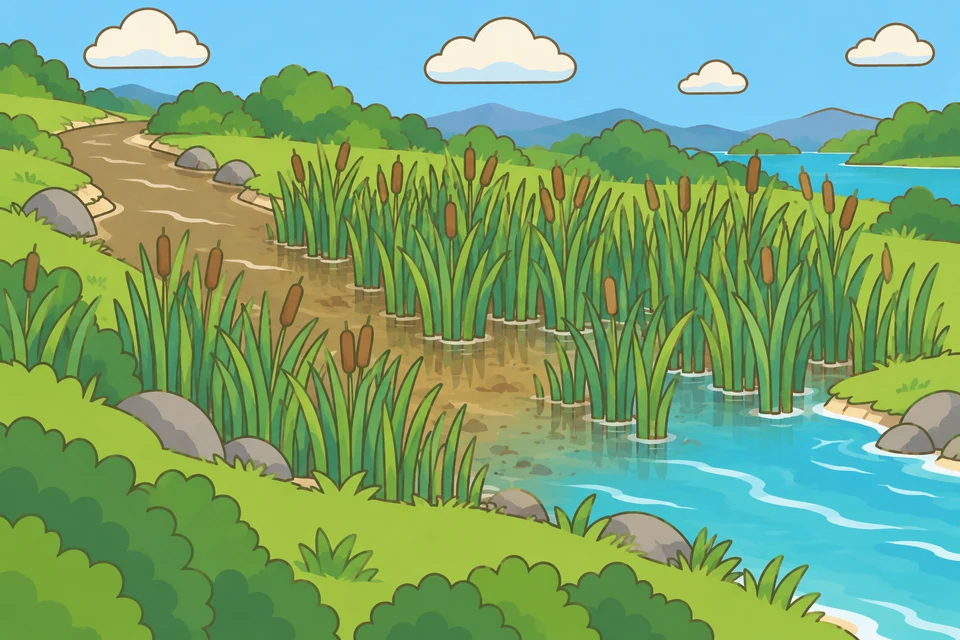
As a stream enters a wetland, thick stems and leaves get in its way and the water slows right down. Slow water cannot carry as much mud, so the mud sinks to the bottom, just as muddy water in a jar clears when you leave it to stand.
Rain running off farms often carries nutrients from fertiliser and animal dung, such as nitrogen and phosphorus. Wetland plants soak up some of these to grow, and microbes, living things too small to see, can turn some of the nitrogen into a gas that goes back into the air.
But a wetland is not a magic water filter. Too much mud or too many nutrients can choke it, kill its plants and even wash stored nutrients back out. Wetlands cannot deal with toxic chemicals or plastic rubbish, so the best fix is to stop pollution at the source.
Where to see it in New Zealand
Across New Zealand, many farms and councils build constructed wetlands beside streams and plant them with native wetland plants. Runoff from paddocks and roads slows down there and drops its sediment before reaching rivers and lakes. It is one of the common ways people here are working to improve water quality.
Try it together
Put some water in a clear jar with a lid, add two spoonfuls of garden soil, close it tightly and shake. Leave it still and check every ten minutes as the mud settles and the water clears. Even when it looks clear, do not drink it.
Kids also ask
Can you drink water that has come out of a wetland?
No. A wetland makes water clearer, but it can still contain germs, parasites and invisible pollution. Water from outdoors always needs proper treatment before it is safe to drink.
Why can't wetlands handle unlimited pollution?
A wetland can only settle mud and take up nutrients so fast. With too much pollution, mud fills it in and plants sicken or die, so the wetland itself is damaged and can no longer help.
How can families help wetlands?
Keep rubbish out of streams and never pour paint or cleaning products down a stormwater drain, because these drains usually lead straight to streams. You can also join community planting days along local waterways.
In the game, “Water filtering” is a nature card on Reed Wetland.
Your child finds this card by reaching the right place or meeting the right weather on the island, and lights it up by answering the question on the back. Tap the button below and the game shows your child which island it is on and how to find it. Mochi Isle is a browser learning game for ages 5 to 18; the main island and the daily lesson are free.
Find “Water filtering” on the island ↗ All cards from Reed Wetland