 Mochi Isle
 Permafrost · Aurora IcefieldScience for kids
What is permafrost?
In short: Permafrost is ground, such as soil, rock and sediment, that stays at or below 0 °C for at least two years in a row. It lies beneath the surface and is not just snow. The top layer may thaw in summer, but deeper down it stays frozen.
How it works
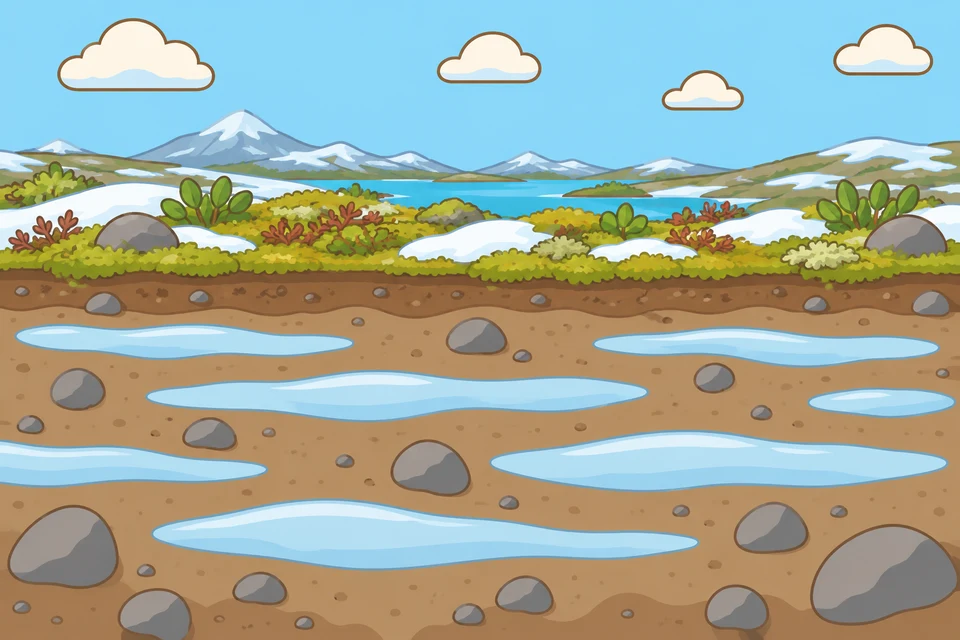
What makes ground permafrost is its temperature, not whether it has ice. If soil or rock stays at or below 0 °C for two or more years running, it counts. Much permafrost contains ice that binds the soil as hard as concrete, but some is dry, with hardly any ice at all.
On top of permafrost there is usually an 'active layer' that thaws and turns muddy in summer, letting mosses and small plants grow, then freezes again in winter. Below it, the permafrost can be hundreds of metres thick in places and may have been frozen for many thousands of years.
Permafrost holds huge amounts of ancient plant remains that never rotted, like food kept in a freezer. Scientists have even found mammoth remains in Siberian permafrost. When permafrost thaws, the ground can slump, buildings and roads crack, and the thawed remains rot, releasing carbon dioxide and methane.
Where to see it in New Zealand
Permafrost is not common in New Zealand, but in Antarctica, where New Zealand scientists often do research, permafrost lies beneath the cold, dry ground of the McMurdo Dry Valleys. In the Northern Hemisphere, huge areas of Alaska, northern Canada and Siberia have permafrost, and it is found on the Tibetan Plateau too.
Try it together
Fill a plastic tub with wet sand or soil, press it flat and freeze it overnight. Feel how hard it is, then put a small toy house on top and leave the tub in the sun. As it thaws, does the house tilt or sink?
Kids also ask
Is permafrost just snow that never melts?
No. Snow and glaciers sit on top of the ground, while permafrost is the soil and rock underneath. Even where grass grows on the surface in summer, frozen ground can lie below.
How do people build houses on permafrost?
A warm building can thaw the frozen ground beneath it and make it sink. So in permafrost areas, houses are often raised on posts, letting cold air flow underneath and keep the ground frozen.
Why are scientists worried about thawing permafrost?
Permafrost stores lots of carbon. When it thaws, old plant remains rot and release greenhouse gases such as carbon dioxide and methane, which can warm the climate further and thaw even more permafrost.
In the game, “Permafrost” is a nature card on Aurora Icefield.
Your child finds this card by reaching the right place or meeting the right weather on the island, and lights it up by answering the question on the back. Tap the button below and the game shows your child which island it is on and how to find it. Mochi Isle is a browser learning game for ages 5 to 18; the main island and the daily lesson are free.
Find “Permafrost” on the island ↗ All cards from Aurora Icefield