 Mochi Isle
 Snow shelters · Aurora IcefieldScience for kids
How can a snow shelter keep you warm?
In short: Snow is full of trapped air, and air is poor at carrying heat, so snow walls slow down heat loss and a snow shelter can be much warmer than the wind outside. Real snow shelters still need good design, ventilation and safety know-how.
How it works
Fresh snow is made of countless snowflakes piled loosely together, with tiny gaps of air between them. Air is a poor conductor of heat, which means heat struggles to pass through it. Puffer jackets and woolly jumpers work the same way, and a thick layer of snow acts like a giant duvet.
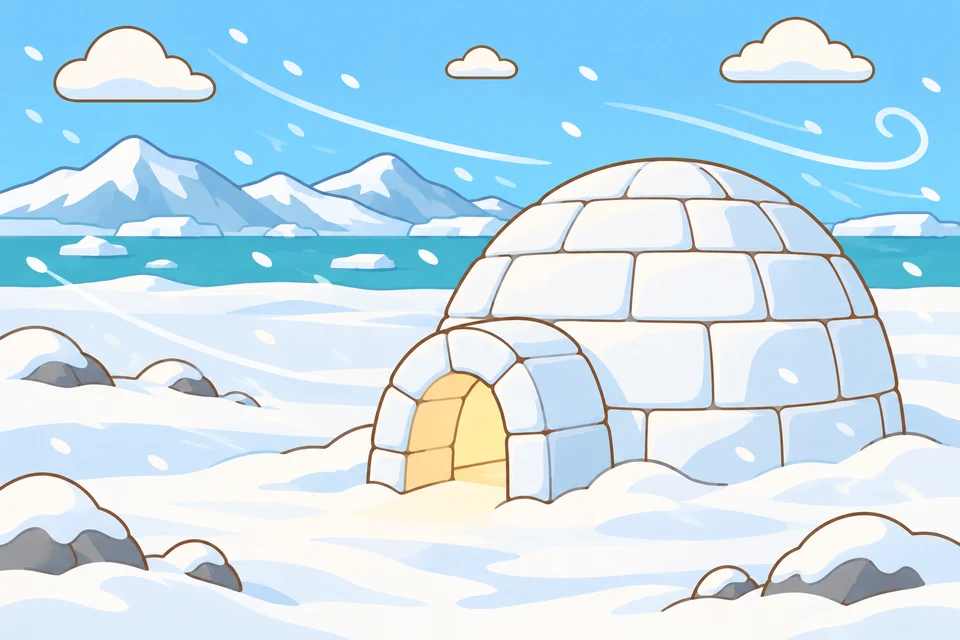
Some Inuit communities of the Arctic have traditionally built igloos from blocks of packed snow. The dome shape is strong enough to hold up the heavy blocks. The entrance tunnel is lower than the sleeping platform, so heavy cold air sinks into the tunnel while warm air rises and stays around the people.
Body heat and a small oil lamp melt the inner wall slightly, which then refreezes into an icy glaze that makes the shelter stronger and more windproof. A snow shelter must always have an air hole for fresh air. Untrained people digging snow caves risk running short of air or being buried by collapsing snow.
Where to see it in New Zealand
Snow shelters are not common in New Zealand, but in northern Canada and Greenland, Inuit have long used igloos as winter homes and as shelters on hunting trips. In the Southern Alps, people on alpine skills courses learn from trained instructors how to build emergency snow shelters using the same ideas.
Try it together
Pour warm (not hot) tap water into two cups. Wrap one cup in a thick towel or bubble wrap and leave the other bare. After half an hour, compare them with a finger or a thermometer. The air trapped in the wrapping slows heat loss, just like snow.
Kids also ask
How warm is it inside an igloo?
Much warmer than out in the freezing wind, but because the walls are made of snow it can never get really hot inside, or the walls would melt. People still wear warm clothes and sleep on furs or in sleeping bags.
Why does a snow shelter need a hole?
Breathing uses up oxygen and adds carbon dioxide, and a lamp uses oxygen too. Snow walls can be very tight, so without an air hole the air inside gets stale and can become dangerous.
Can I dig a snow cave to play in?
No. Snow caves and snowbanks can suddenly collapse and bury someone, especially on slopes or in piles left by snowploughs. Building snow shelters is an emergency skill for trained adults. For snow play, build a snowman on flat ground with an adult nearby instead.
In the game, “Snow shelters” is a nature card on Aurora Icefield.
Your child finds this card by reaching the right place or meeting the right weather on the island, and lights it up by answering the question on the back. Tap the button below and the game shows your child which island it is on and how to find it. Mochi Isle is a browser learning game for ages 5 to 18; the main island and the daily lesson are free.
Find “Snow shelters” on the island ↗ All cards from Aurora Icefield