 Mochi Isle
 Blue ice · Aurora IcefieldScience for kids
Why is glacier ice blue?
In short: Thick, pure ice with very few air bubbles absorbs a little more of the red light in sunlight. The light that passes through and scatters out of the ice is left looking blue. The thicker and purer the ice, the bluer it looks.
How it works
Sunlight looks white, but it is really a mix of all the colours: red, orange, yellow, green, blue and violet. Ice and water absorb red light slightly more than blue. In a small ice cube the difference is far too small to notice, so the cube looks clear.
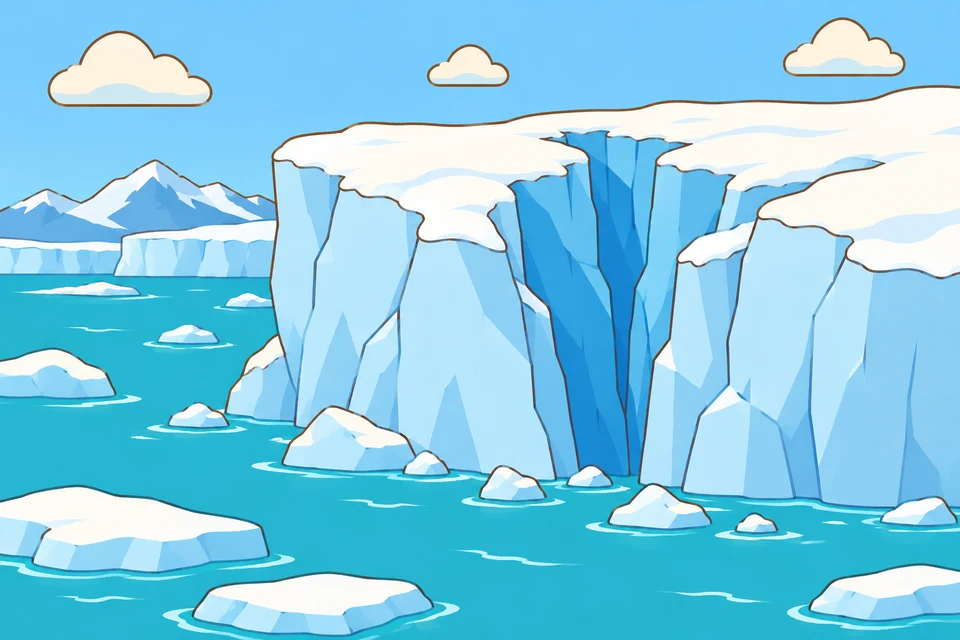
Glacier ice forms when layers of snow are squashed by the snow above them, year after year. Most of the air bubbles get squeezed out, leaving thick, dense ice. Light travels a long way through it, the red is absorbed along the way, and what is left looks deep blue.
So why is snow white? It is full of tiny ice crystals and air pockets that bounce light back in every direction before much colour can be absorbed, and all the colours mixed together look white. Blue ice is not dyed, and it is not just reflecting the sky.
Where to see it in New Zealand
On the West Coast, crevasses in Franz Josef Glacier / Kā Roimata o Hine Hukatere and Fox Glacier / Te Moeka o Tuawe can show blue ice. Icebergs floating on Tasman Lake in Aoraki / Mount Cook National Park can be blue too. Glaciers are dangerous, so view them from public tracks or with a professional guide.
Try it together
Freeze a tray of ice cubes and hold one up to the light. The cloudy white centre is full of trapped air bubbles bouncing light around. The clearer parts have fewer bubbles, more like pure glacier ice, but they are far too thin to look blue.
Kids also ask
Why are some icebergs white and others blue?
White parts are full of air bubbles or covered in snow, so they bounce light back. Blue parts are old, tightly packed ice with few bubbles. When an iceberg breaks or rolls over, it often shows its blue inside.
Is deep water blue for the same reason?
Partly. Water also absorbs a little more red light, so very deep, clear water looks bluish. The surface reflecting the sky adds to the blue colour of the sea as well.
In the game, “Blue ice” is a nature card on Aurora Icefield.
Your child finds this card by reaching the right place or meeting the right weather on the island, and lights it up by answering the question on the back. Tap the button below and the game shows your child which island it is on and how to find it. Mochi Isle is a browser learning game for ages 5 to 18; the main island and the daily lesson are free.
Find “Blue ice” on the island ↗ All cards from Aurora Icefield