 Mochi Isle
01
Altitude & temperature
The higher you climb, the colder it gets — about 6 degrees colder for every 1,000 metres. Thin air up high cannot hold on to the sun's heat.
Why is it colder at the top of a mountain? Read more →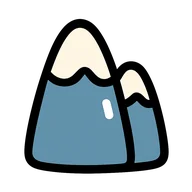 Cedar Highlands · Altitude03 / 12
Every 1,000 m up, it gets 6 °C colder: grass at your feet, snow overhead. Cedar Highlands get colder the higher you climb: about 6 °C for every 1,000 m. Meadows at the foot, conifers on the slopes, snow on the peaks all year. Your child dresses for the weather and helps reopen the hot-spring inn.
The higher you climb, the colder it gets — about 6 degrees colder for every 1,000 metres. Thin air up high cannot hold on to the sun's heat.
Why is it colder at the top of a mountain? Read more →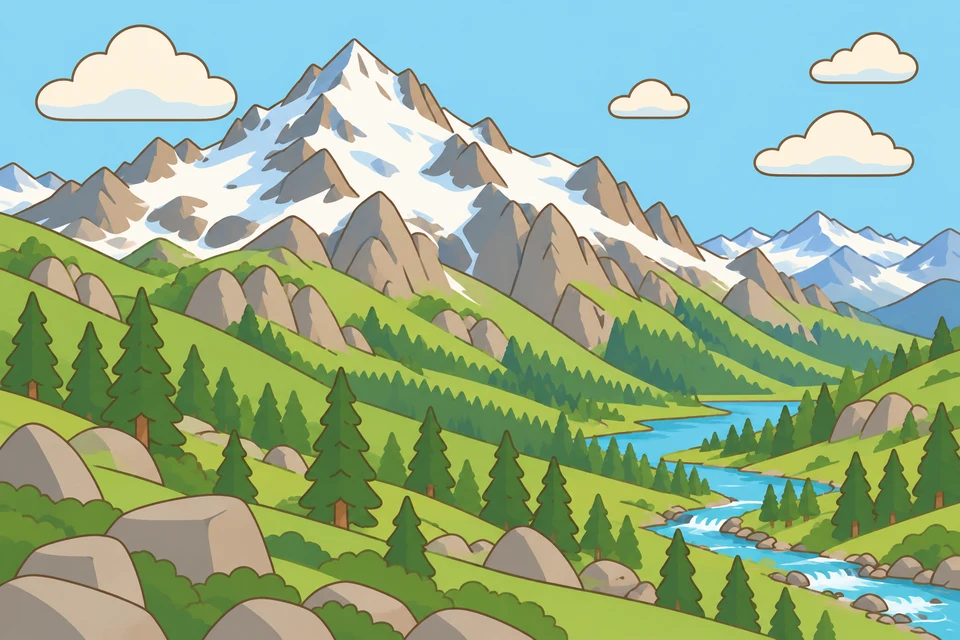
Mountains have an invisible line: above it, it is so cold the snow never melts. It is called the snow line — the nearer the equator, the higher it is.
What is the snow line, and why does its height change? Read more →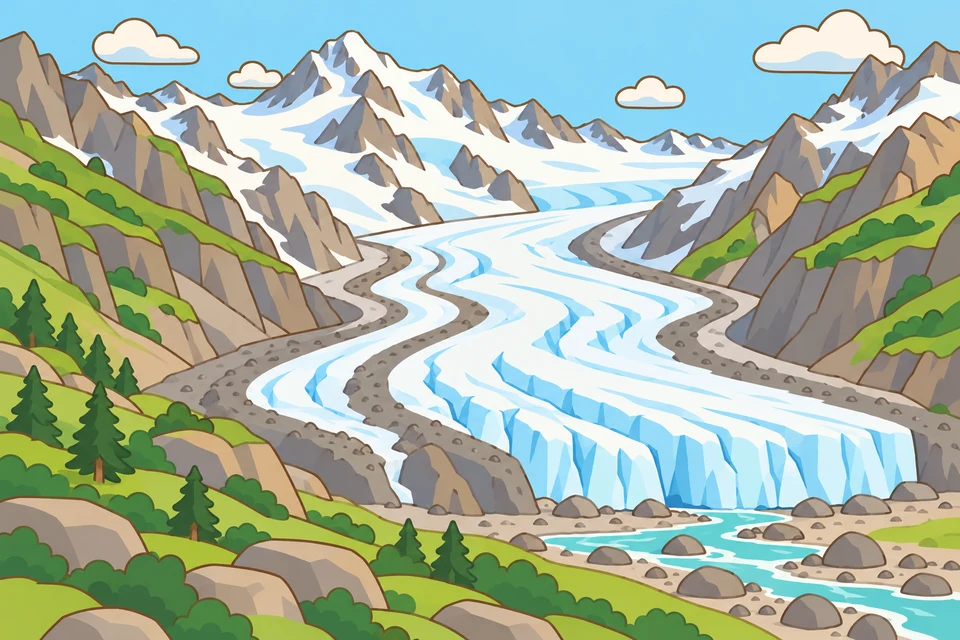
A glacier is a slow river of ice: layers of snow squash into ice that creeps downhill a few dozen metres a year, carving valleys into a U shape.
How does a glacier move? Read more →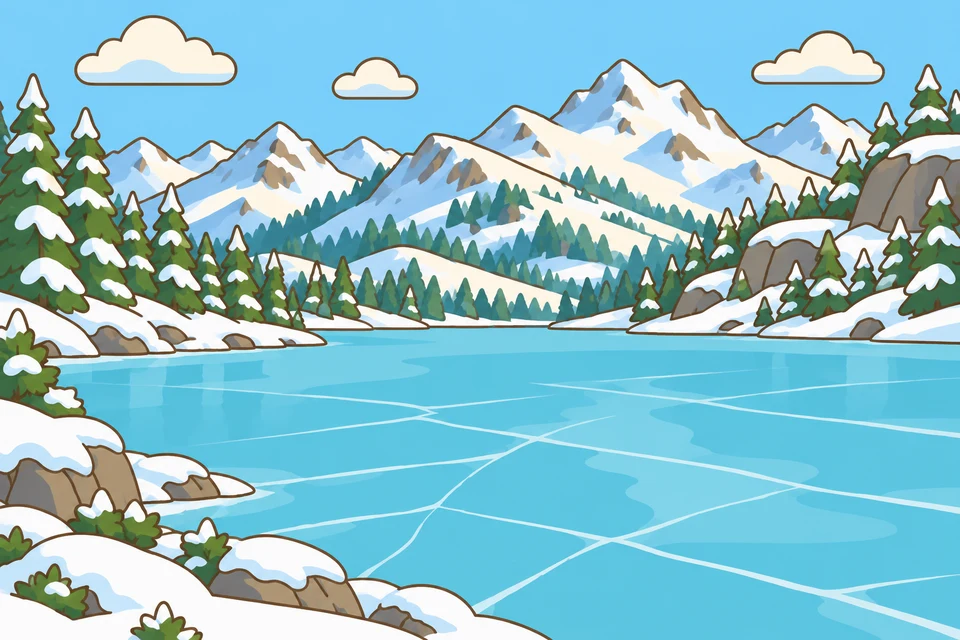
In winter the lake surface freezes, but the water below stays liquid. Ice is lighter than water, so it floats on top like a blanket and fish stay cosy underneath.
How do fish survive under a frozen lake? Read more →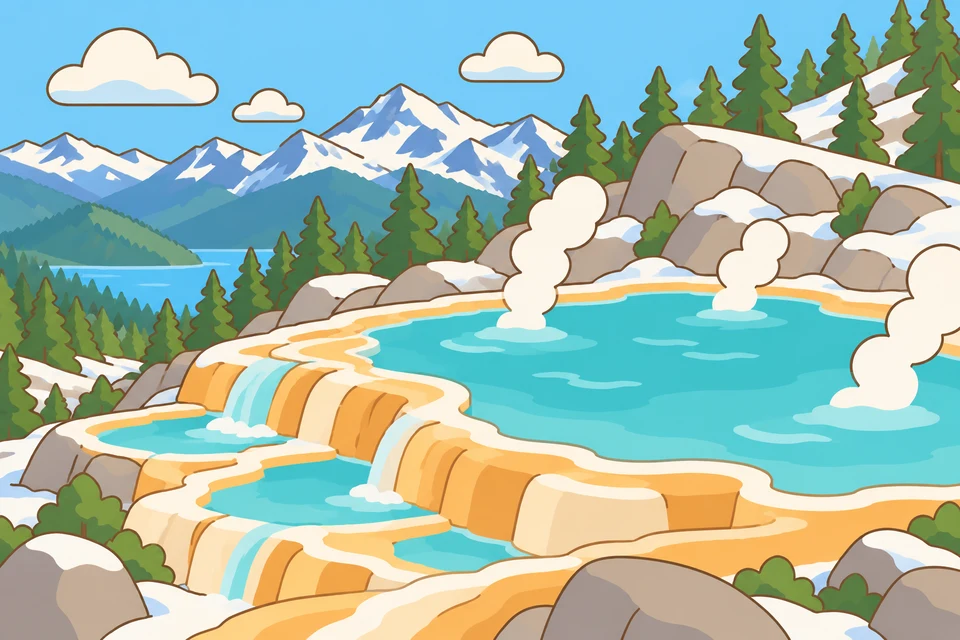
Deep underground the rocks are hot. Rainwater soaks down, gets heated, and bubbles back up through a spring — a hot spring.
Why is the water in a hot spring hot? Read more →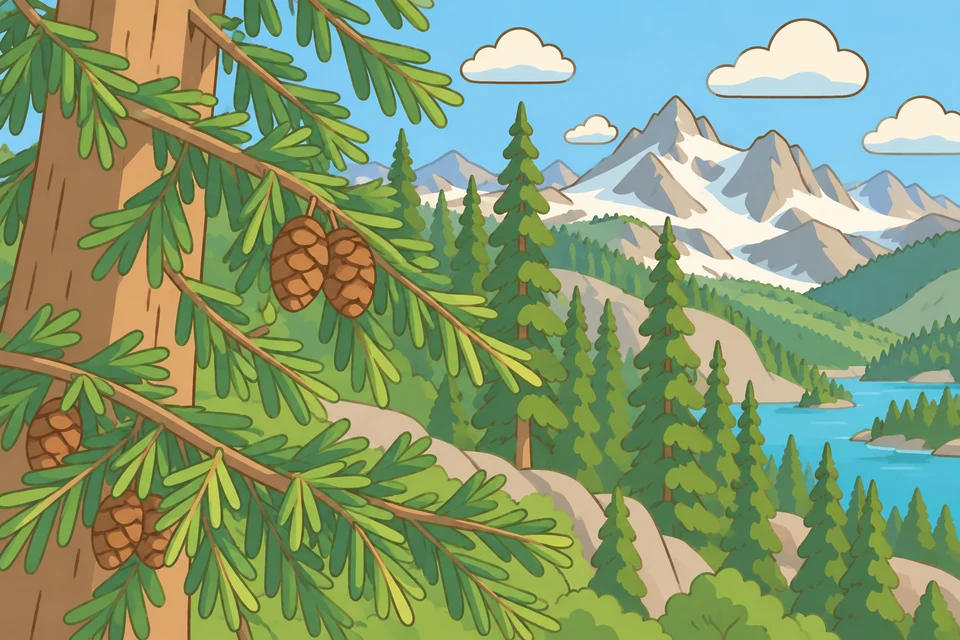
Cedar leaves are thin needles with a waxy coat that resists frost and drying out — that is why cold mountains are full of conifers.
Why do conifers grow on cold mountains? Read more →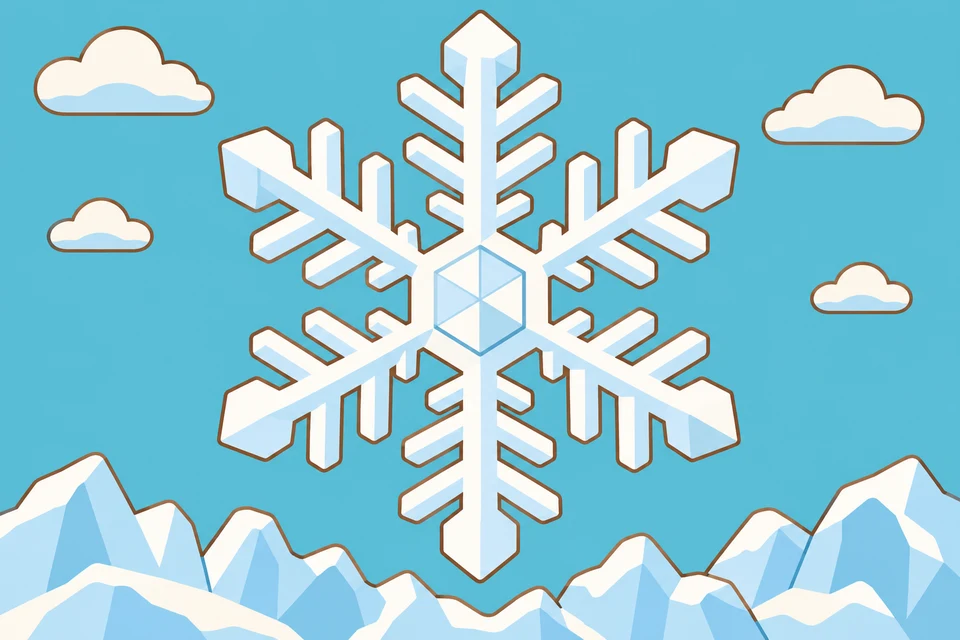
Snowflakes are ice crystals made when tiny droplets freeze inside clouds. Every snowflake has six points — but no two look exactly alike.
Why do snowflakes have six points? Read more →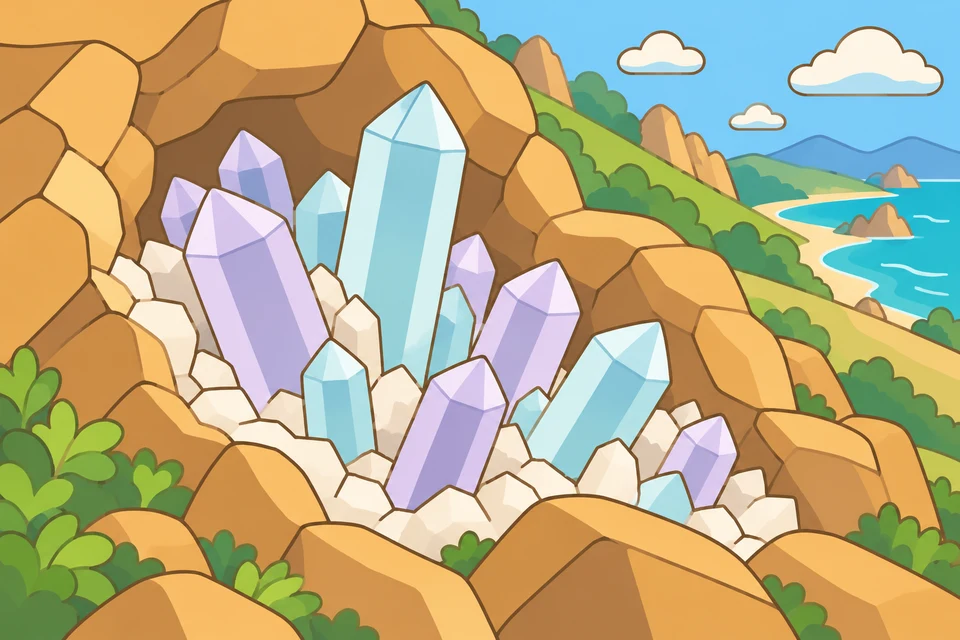
Some rocks hide crystals: they grow little by little as rock slowly cools underground, which gives them flat faces and sharp points.
How do crystals grow inside rocks? Read more →Each card turns up when your child reaches a place or meets the weather on the island; answer the question on the back and the card lights up. The main island and the daily lesson are free, right in the browser.
Start playing ↗