 Mochi Isle
01
River
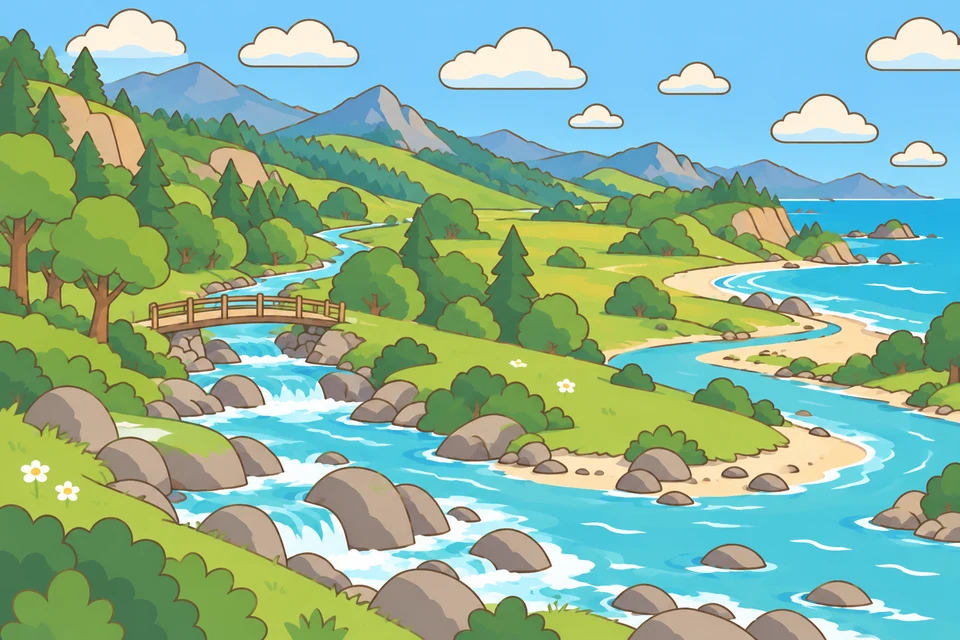
Rivers always flow from high ground to low ground and end up in the sea. Towns grow beside rivers for water and for moving goods by boat.
Why do rivers always flow downhill? Read more → Mochi Isle · Home · ecosystems01 / 12
An island is alive: soil, water, grass and animals keep each other going. Mochi Isle is your child’s first island, and a living one: soil, water, grass and animals keep each other going. It starts out grey; your child brings the river, the pond and the forest back to life by learning moves from the island spirits and answering questions.
Rivers always flow from high ground to low ground and end up in the sea. Towns grow beside rivers for water and for moving goods by boat.
Why do rivers always flow downhill? Read more →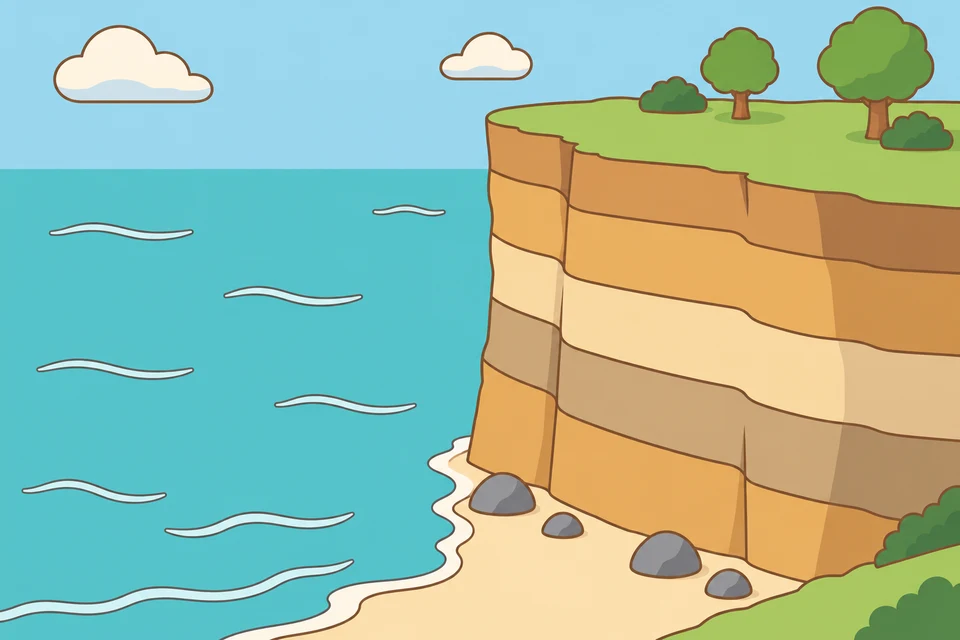
Highlands rise above the land around them; their steep edges are cliffs. The higher you climb, the cooler the air gets.
What are highlands, and how do cliffs form? Read more →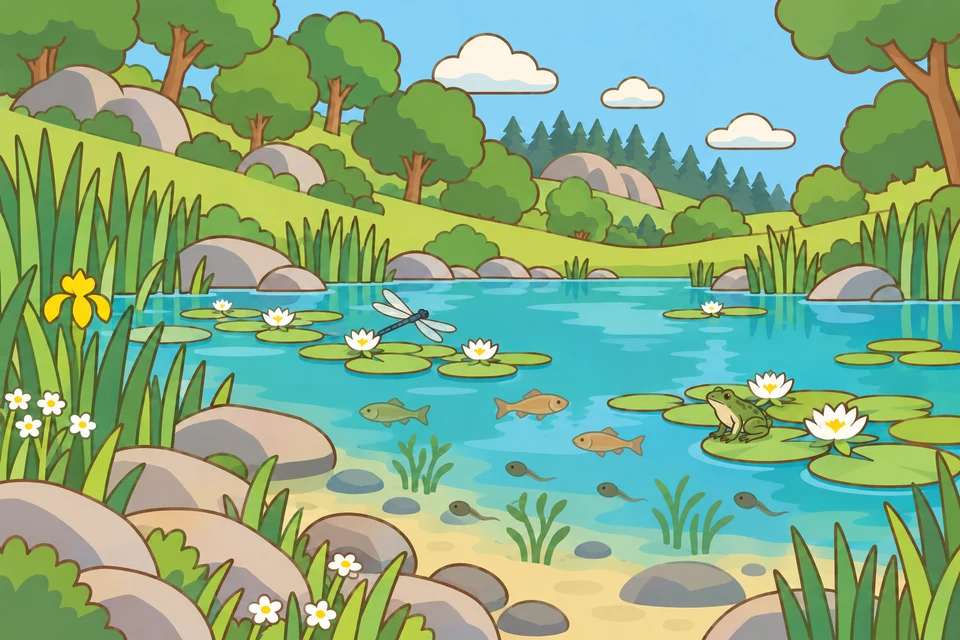
A pond is a small pool of still fresh water. Baby frogs, fish and dragonflies all grow up in it.
What lives in a pond? Read more →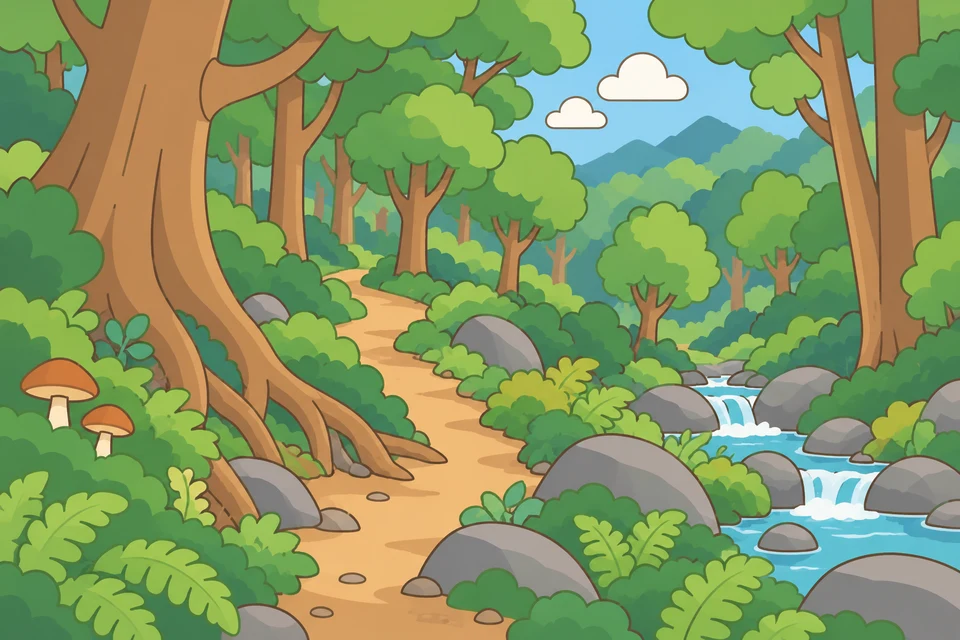
Tree roots soak rain into the soil like a sponge, forests are home to many animals, and leaves give off the oxygen we breathe.
Why are forests so important? Read more →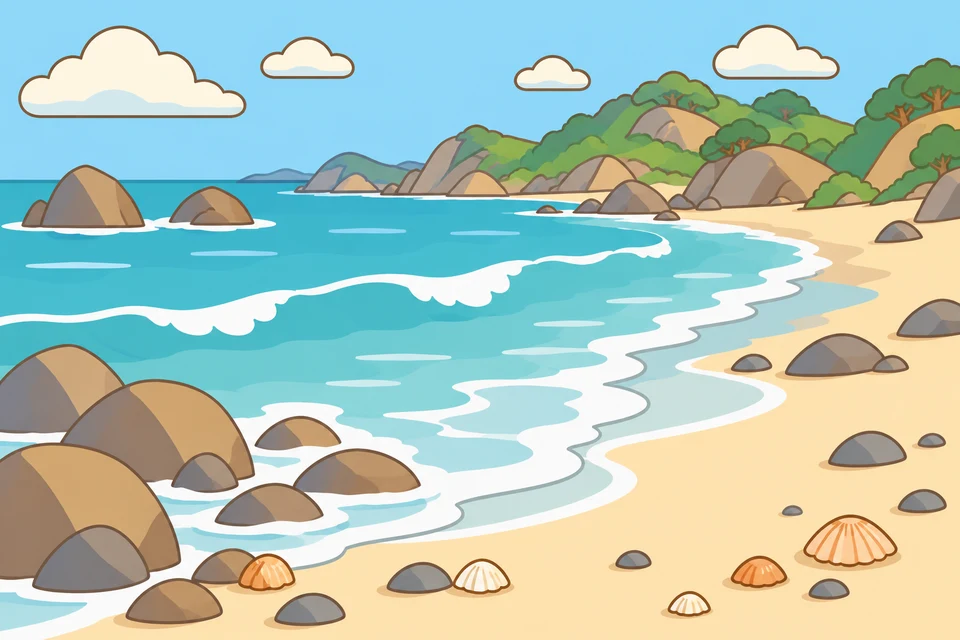
Sand is rock and shell ground down by waves over thousands of years.
Where does beach sand come from? Read more →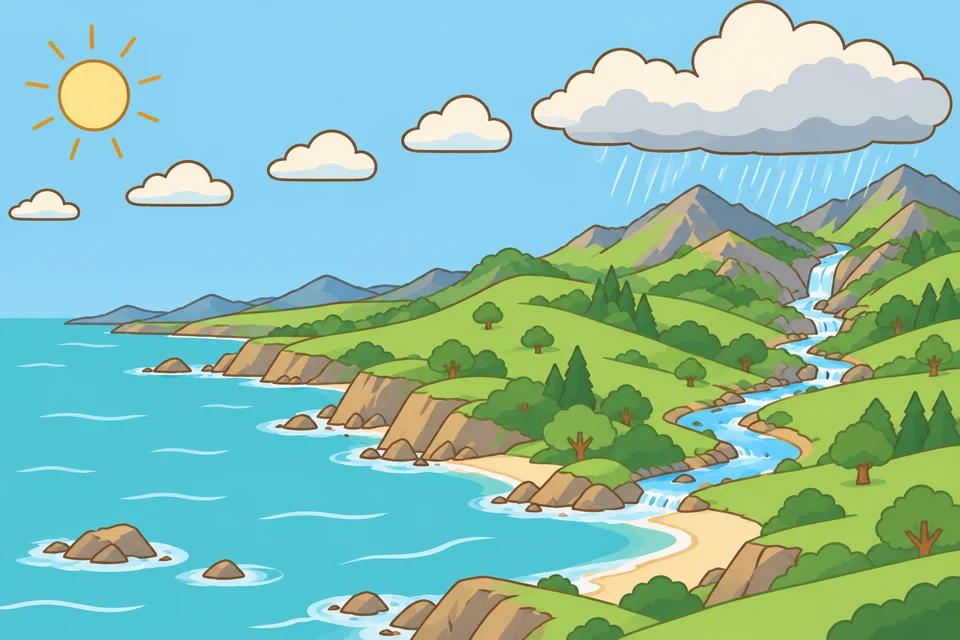
The sun turns sea and lake water into invisible vapour; it rises, cools into tiny droplets that gather into clouds, falls as rain, and flows back to rivers and the sea.
How does the water cycle work? Read more →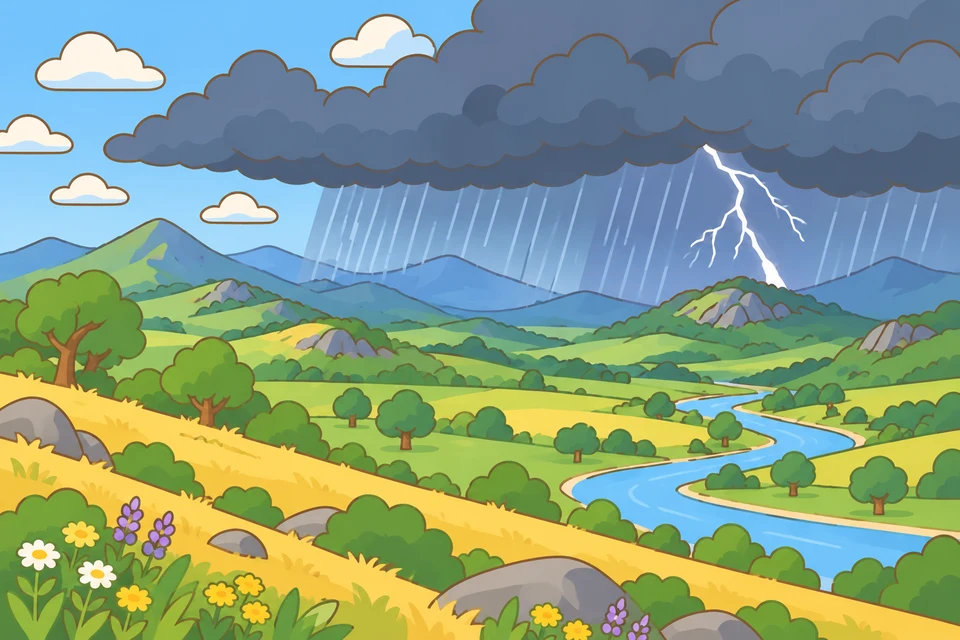
Lightning is electricity from the clouds jumping out; it heats the air so fast that the air bursts outward — that boom is thunder.
What makes lightning and thunder? Read more →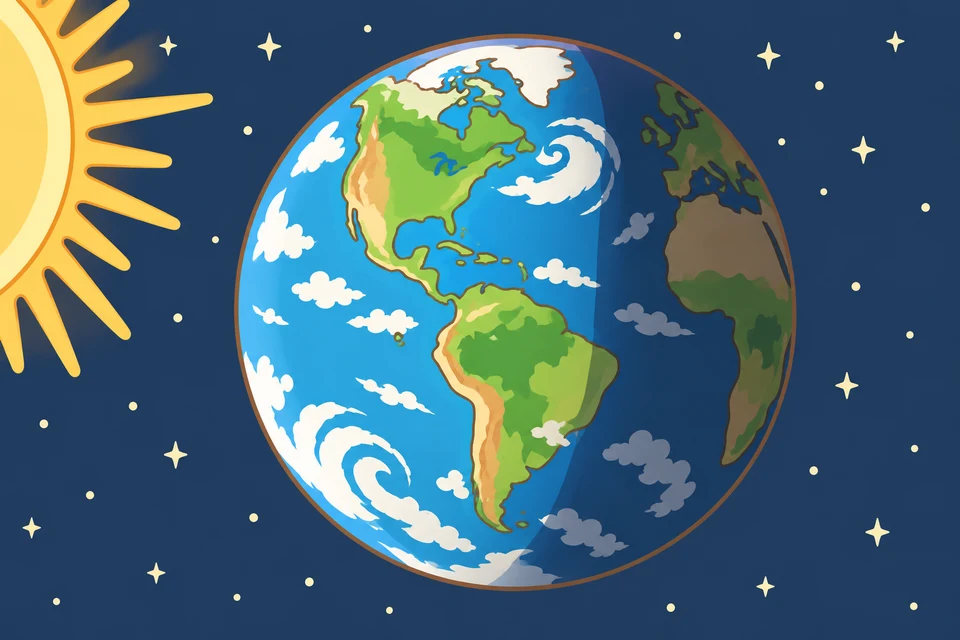
Earth spins like a top. The side facing the sun has day; the side facing away has night.
Why do we have day and night? Read more →Each card turns up when your child reaches a place or meets the weather on the island; answer the question on the back and the card lights up. The main island and the daily lesson are free, right in the browser.
Start playing ↗