 Mochi Isle
 Hot spring · Cedar HighlandsScience for kids
Why is the water in a hot spring hot?
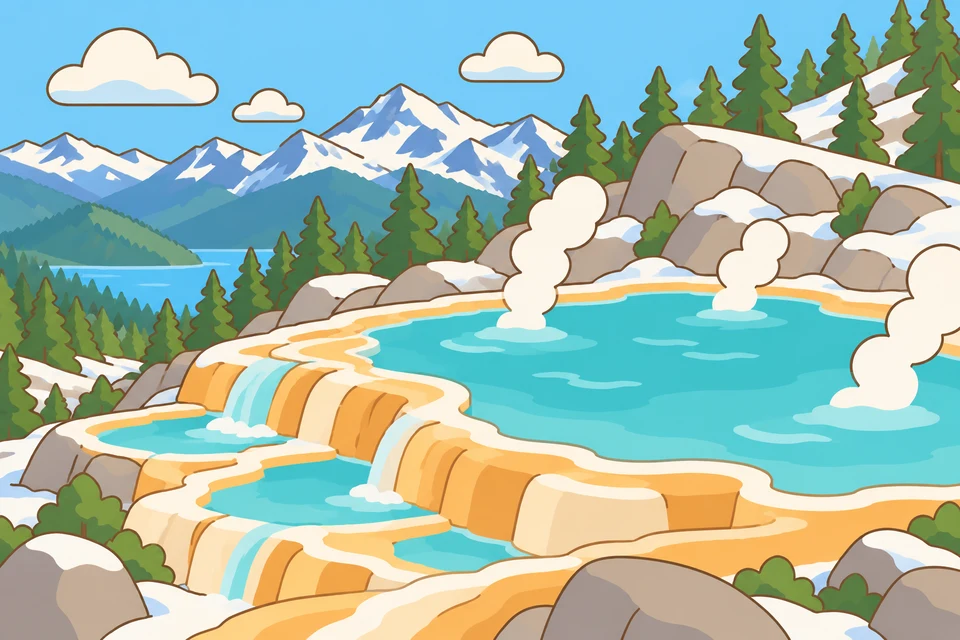
In short: Deep underground the rocks are hot. Rainwater soaks down through cracks, gets heated by the hot rock, and because hot water is lighter, it rises back up and flows out of a spring. Volcanic areas have the most hot springs.
How it works
The deeper you go into the Earth, the hotter it gets. Near volcanoes, hot melted rock called magma lies not far below the surface and heats the rocks around it. Rain and melted snow seep down through soil and cracks in the rock, and are heated as they go, some of it until it boils.
Hot water is lighter than cold water, so it rises up through cracks and bubbles out of the ground at a spring. That is a hot spring. In some places the hot water gets trapped underground and pressure builds up until it suddenly shoots high into the air. This is called a geyser.
As it travels underground, the hot water dissolves minerals from the rocks, so hot springs often have unusual colours and smells. Some smell like rotten eggs, because of a gas containing sulphur. The ground around hot springs can be a thin crust over boiling water, so always stay on the paths.
Where to see it in New Zealand
Rotorua in the North Island steams with hot springs, bubbling mud pools and geysers, and local Māori have used the heat for cooking, bathing and warmth for hundreds of years. At Hot Water Beach on the Coromandel, digging a hole in the sand at low tide lets hot water seep up, though some spots are hot enough to burn.
Try it together
With an adult, fill a large clear bowl with cold water. Fill a small bottle with warm tap water and two drops of food colouring, cap it and lower it to the bottom. Open the cap and watch: does the warm, coloured water rise like smoke?
Kids also ask
Why do some hot springs smell like rotten eggs?
The hot water carries a gas called hydrogen sulphide up from underground, and it smells like rotten eggs. In Rotorua you can often smell it in the air around town.
How do you stay safe in natural hot pools?
Only bathe in pools that are open to visitors. New Zealand health advice is to keep your head out of the water in natural geothermal pools, because a rare but dangerous germ can enter the body through the nose.
In the game, “Hot spring” is a nature card on Cedar Highlands.
Your child finds this card by reaching the right place or meeting the right weather on the island, and lights it up by answering the question on the back. Tap the button below and the game shows your child which island it is on and how to find it. Mochi Isle is a browser learning game for ages 5 to 18; the main island and the daily lesson are free.
Find “Hot spring” on the island ↗ All cards from Cedar Highlands