 Mochi Isle
01
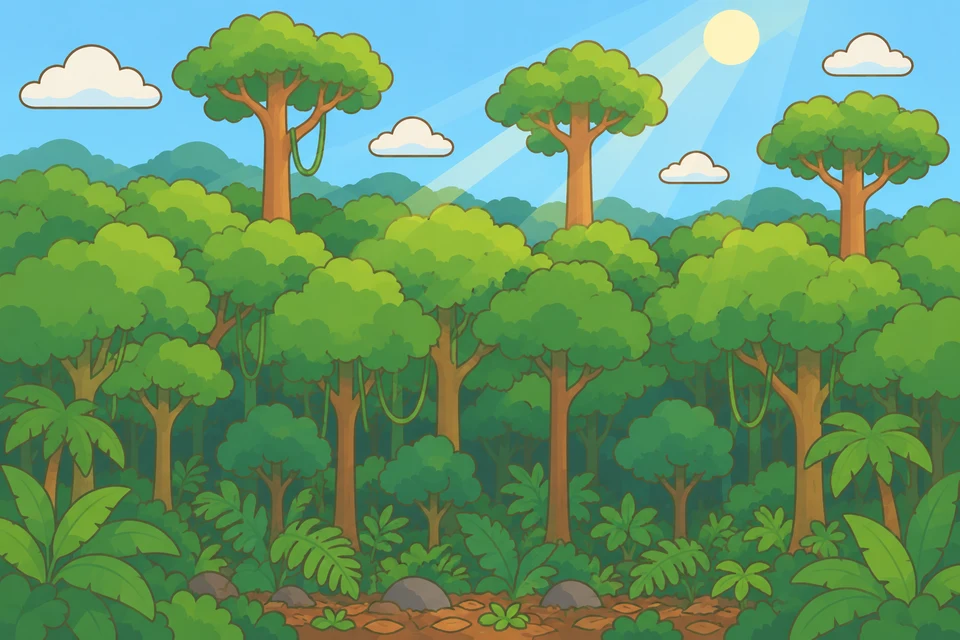
Forest layers
Canopy, understory and floor offer different light and habitats.
Why does a rainforest have layers? Read more → Rainforest Valley · Forest layers06 / 12
Floor, trunk and canopy each have their own animals; roots hold the soil in place. Rainforest Valley is stacked in layers, from the canopy down to the forest floor, each with its own light and its own animals. Heavy rain washes the slopes, and roots and leaf litter hold the soil. Your child protects the slopes so the river can run clear again.
Canopy, understory and floor offer different light and habitats.
Why does a rainforest have layers? Read more →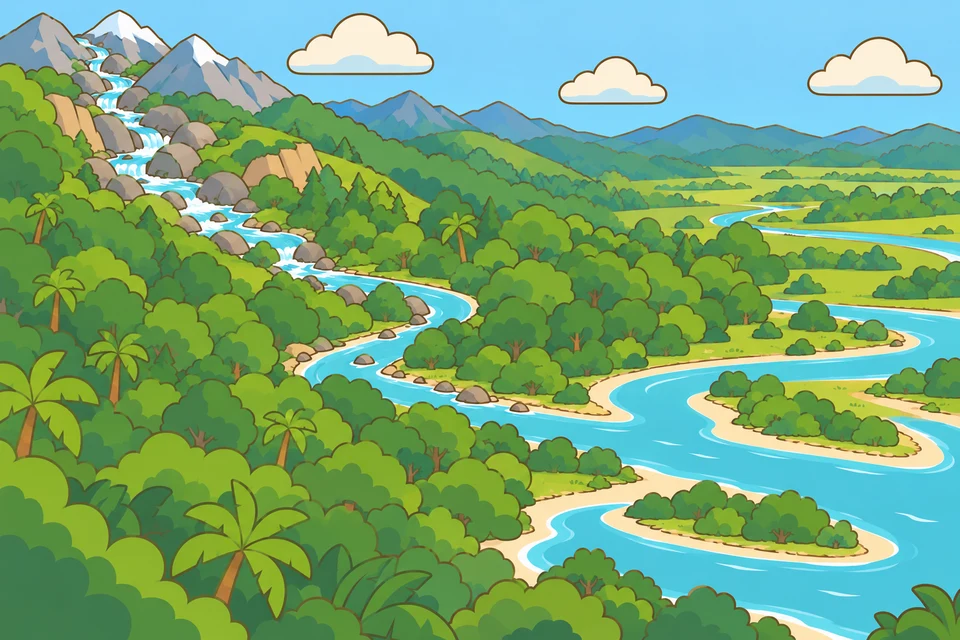
Water generally flows downhill; upstream changes affect downstream.
How are upstream and downstream connected? Read more →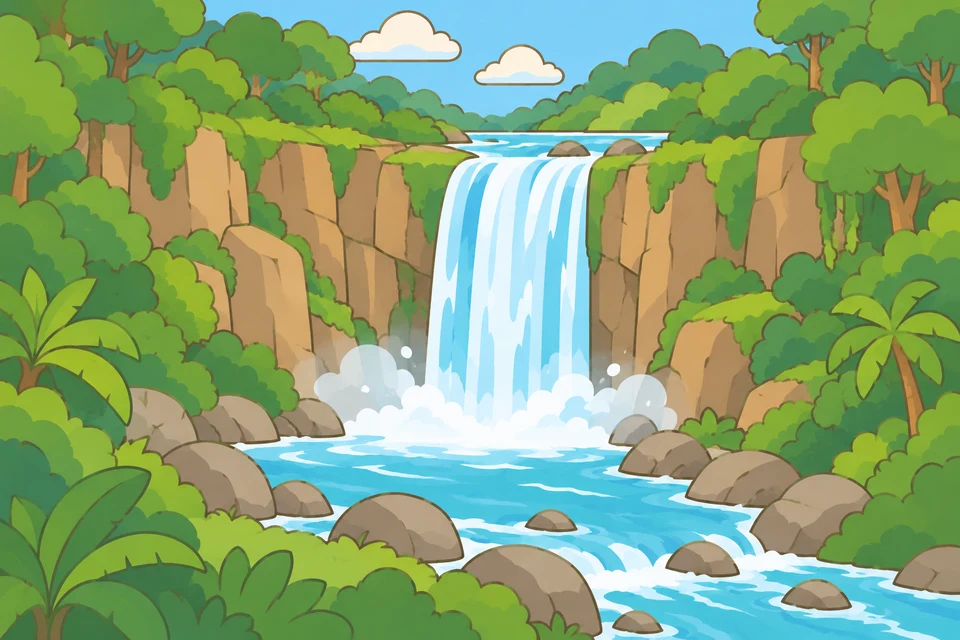
A river falling over a steep drop forms a waterfall, with spray and sound.
How does a waterfall form? Read more →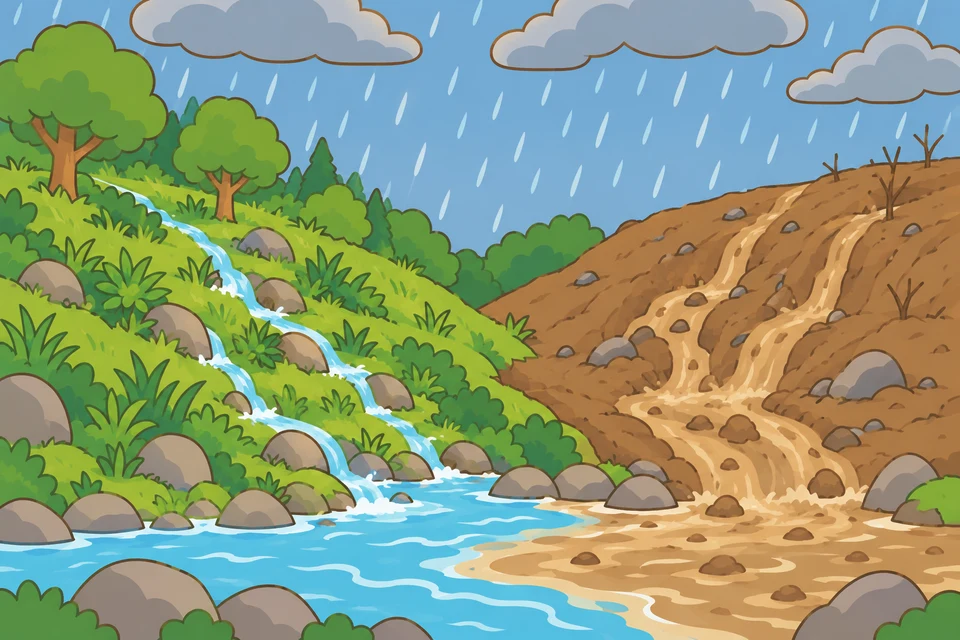
Bare slopes can lose soil in rain; roots and leaf litter help retain it.
Why does rain wash soil off bare slopes? Read more →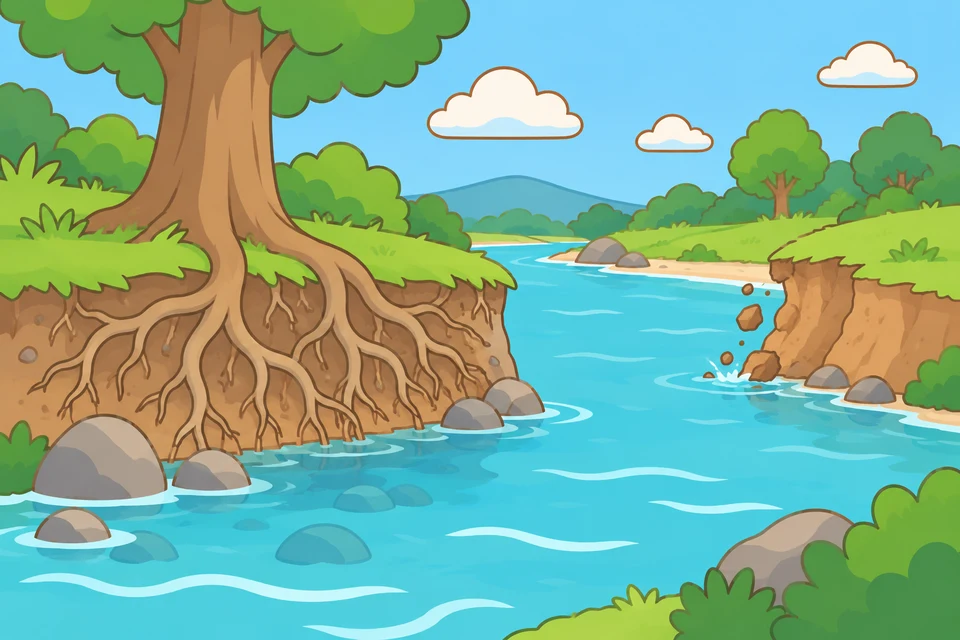
Roots help stabilise soil; river repair also needs slope protection and less sediment.
How do tree roots protect soil and rivers? Read more →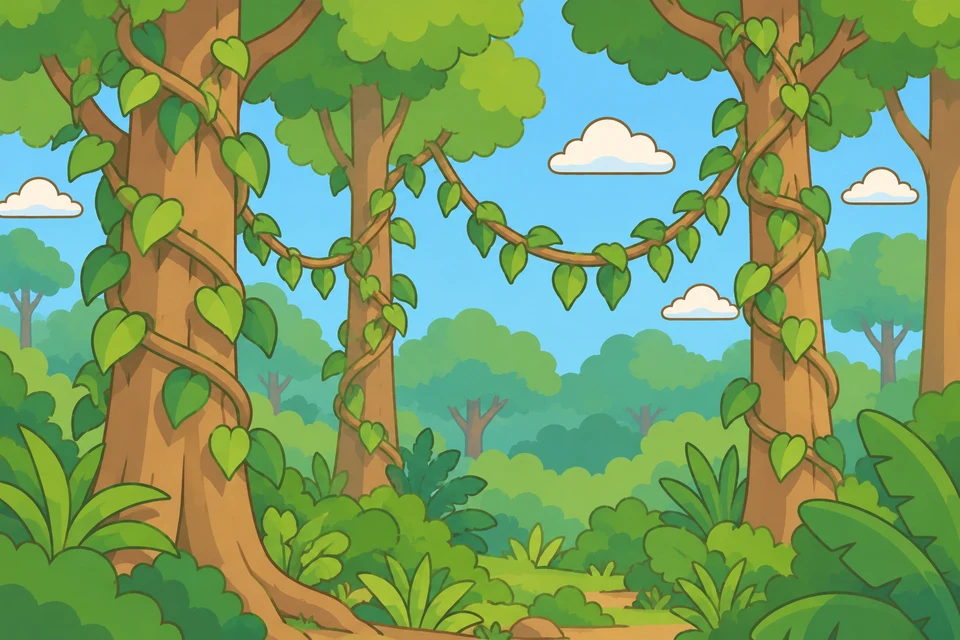
Many vines use supports to reach light; they are not necessarily parasites.
Do vines steal food from the trees they climb? Read more →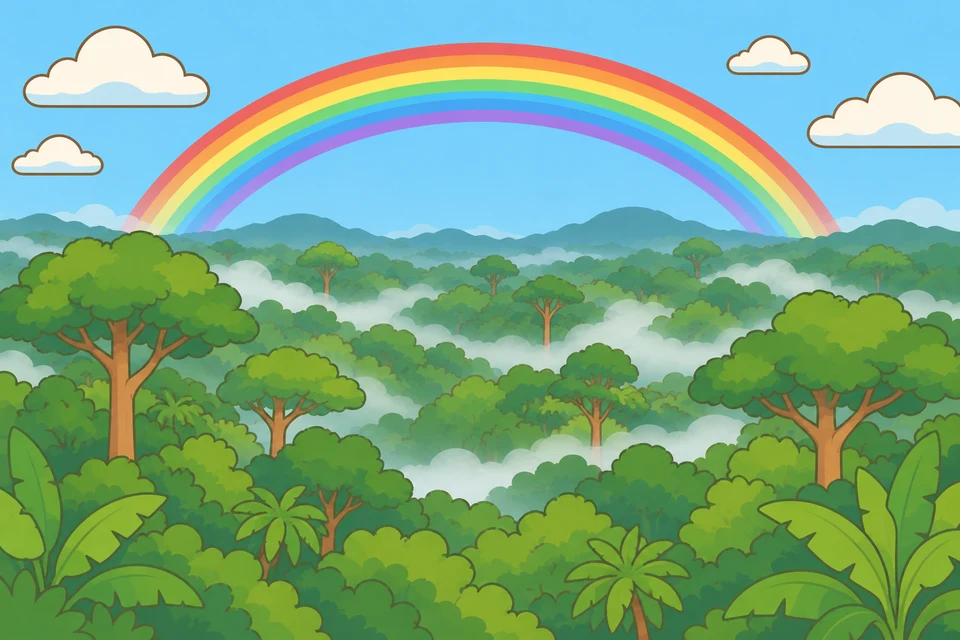
Sunlight bends, reflects and separates in water droplets, making a rainbow at suitable angles.
How does a rainbow form? Read more →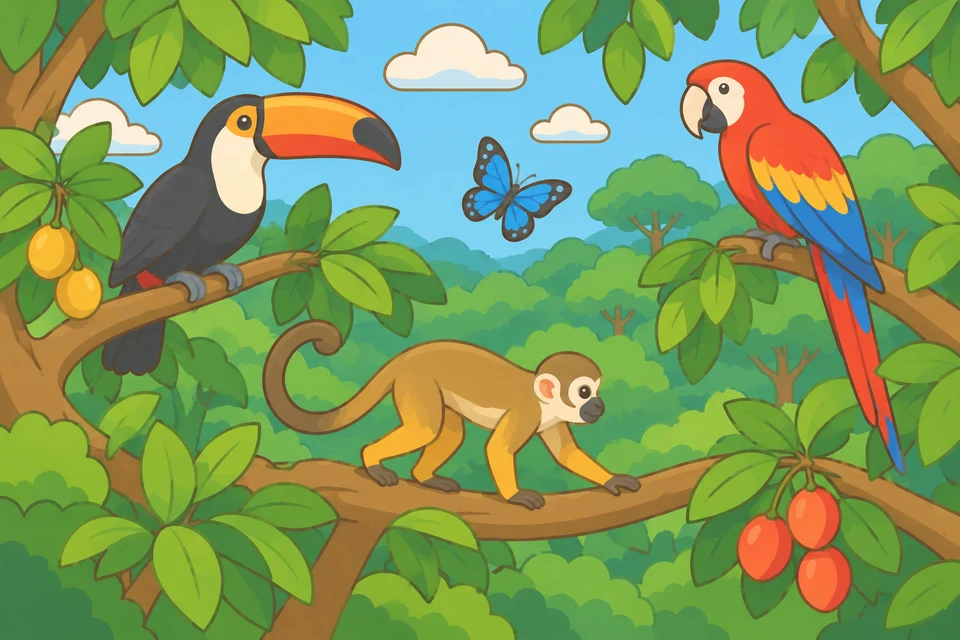
Canopies offer leaves, fruit and space for birds, insects and some mammals.
What animals live in the forest canopy? Read more →Each card turns up when your child reaches a place or meets the weather on the island; answer the question on the back and the card lights up. The main island and the daily lesson are free, right in the browser.
Start playing ↗