 Mochi Isle
 Seagrass and carbon · Coral UnderseaScience for kids
Is seagrass the same as seaweed?
In short: No. Seagrasses are flowering plants that live in the sea, with roots, leaves, flowers and seeds, while seaweeds are algae with no true roots or flowers. Seagrass meadows shelter animals and store carbon in the seabed.
How it works
Seagrasses came from plants that once lived on land and later moved back into the sea. Like land grasses, they have roots and leaves, and they flower and make seeds, but the flowers open underwater and water carries the pollen. Seaweeds grip rocks with a holdfast and have no true roots, leaves or flowers.
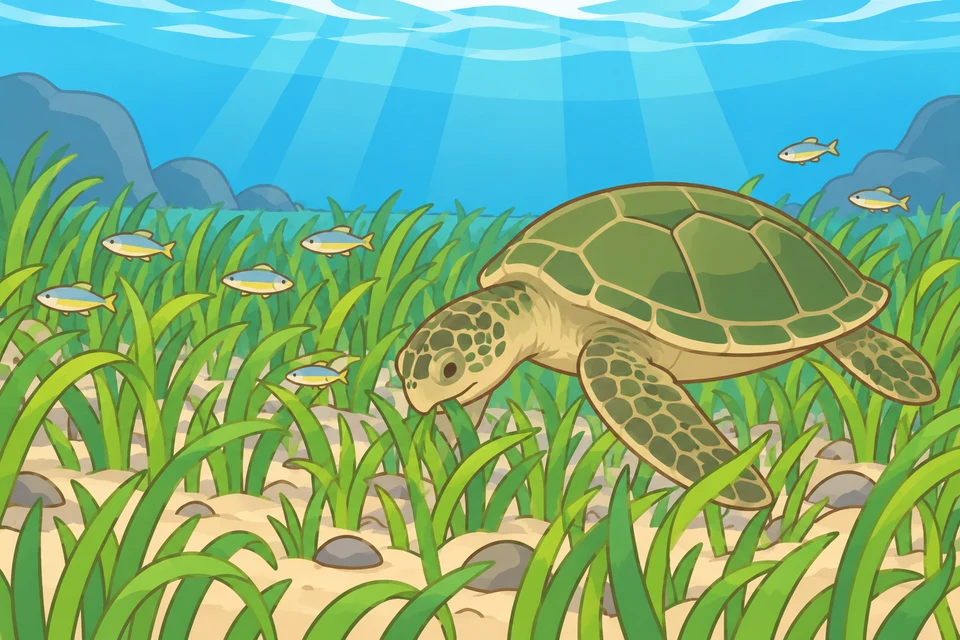
Large patches of seagrass form meadows, like underwater grasslands. Small fish, shrimp, seahorses and shellfish hide among the blades, and many young fish grow up there. Seagrass also calms waves, and its roots hold mud and sand in place, helping keep the water clear.
Seagrass takes in carbon dioxide during photosynthesis and traps fallen leaves and bits in the mud around its roots. That carbon can stay buried for a very long time, so seagrass is called a 'blue carbon' habitat. Protecting it helps slow climate change.
Where to see it in New Zealand
Seagrass grows in many New Zealand harbours and estuaries, such as Tauranga Harbour and Whangārei Harbour. At low tide you may see patches of thin green blades on the mudflats. Research shows seagrass beds are important nursery areas for young fish such as snapper.
Try it together
With an adult, visit an estuary or harbour edge at low tide. Look for thin, ribbon-like green blades of seagrass and compare them with seaweed clinging to rocks. Gently check among the blades for tiny snails or shrimp. Walk around the patches, not on them, and watch for soft mud.
Kids also ask
How does seagrass store carbon?
Like land plants, seagrass uses photosynthesis to take in carbon dioxide and grow. When its leaves and bits sink into the mud, there is little oxygen there, so they break down very slowly and the carbon stays locked away.
Why is seagrass disappearing in some places?
Mud and pollution cloud the water so seagrass gets too little light, and digging, boat anchors and land reclamation damage it too. The good news is that people in some places are replanting seagrass to help meadows recover.
In the game, “Seagrass and carbon” is a nature card on Coral Undersea.
Your child finds this card by reaching the right place or meeting the right weather on the island, and lights it up by answering the question on the back. Tap the button below and the game shows your child which island it is on and how to find it. Mochi Isle is a browser learning game for ages 5 to 18; the main island and the daily lesson are free.
Find “Seagrass and carbon” on the island ↗ All cards from Coral Undersea