 Mochi Isle
 Lost nets and wildlife · Coral UnderseaScience for kids
Why are lost fishing nets dangerous to sea animals?
In short: Fishing nets and lines are mostly made of strong plastic that can last for years in the sea. Once lost or dumped, they keep trapping turtles, fish, seals and seabirds, which is called ghost fishing. Recovering old gear reduces the harm.
How it works
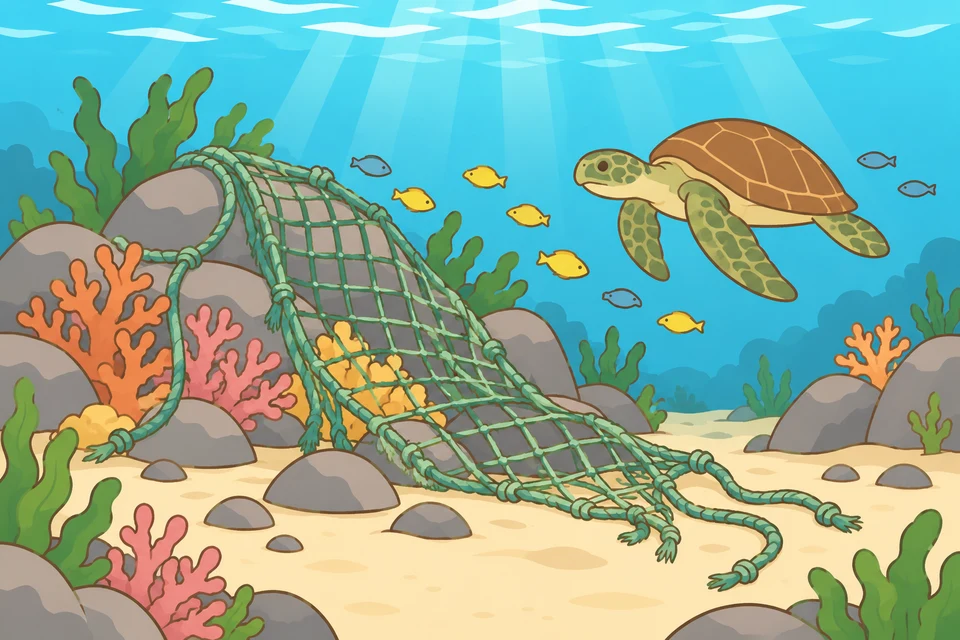
Nets can end up in the sea after storms, after snagging on rocks, or when they are thrown away. Long ago, nets were made from natural fibres that rotted; today most are nylon or other plastics that are light and tough. They can drift or lie on the sea floor for years without breaking down.
A drifting net is an invisible trap that keeps catching fish. Trapped fish attract turtles, seals and seabirds looking for a meal, and they get tangled too. Ropes and loops can tighten around an animal's body, making it hard to swim, feed or reach the surface to breathe.
There are many ways to reduce the harm. Fishers bring old nets back to port for recycling, gear can be marked so it is easier to find, and divers and volunteers clear lost nets from the sea floor. Recycled nets can even be turned into new plastic products. On the beach, we can help by safely picking up old rope and fishing line.
Where to see it in New Zealand
New Zealand fur seals (kekeno) sometimes get tangled in net scraps, rope or packing straps, often around their necks. Seals are a common sight along the coast near Kaikōura. If you see a tangled seal, do not approach it, as seals can bite; contact the Department of Conservation (DOC) instead.
Try it together
Go for a beach walk with an adult, wearing gloves, and collect old rope, fishing line and plastic scraps. Count how many of each you find. Let the adult handle hooks, glass or anything sharp, and stay at least 20 metres away from any seals.
Kids also ask
What is ghost fishing?
It is when lost nets or traps keep catching fish and other animals with nobody looking after them. No one comes to free the trapped animals and the gear never stops working, which is why it is called ghost fishing.
Why is fishing line so dangerous for seabirds?
Fishing line is thin and see-through, so birds can easily tangle their wings or feet in it, and they sometimes swallow bait still attached to hooks. Always take used line and hooks home or put them in a proper bin.
In the game, “Lost nets and wildlife” is a nature card on Coral Undersea.
Your child finds this card by reaching the right place or meeting the right weather on the island, and lights it up by answering the question on the back. Tap the button below and the game shows your child which island it is on and how to find it. Mochi Isle is a browser learning game for ages 5 to 18; the main island and the daily lesson are free.
Find “Lost nets and wildlife” on the island ↗ All cards from Coral Undersea