
Rainbow
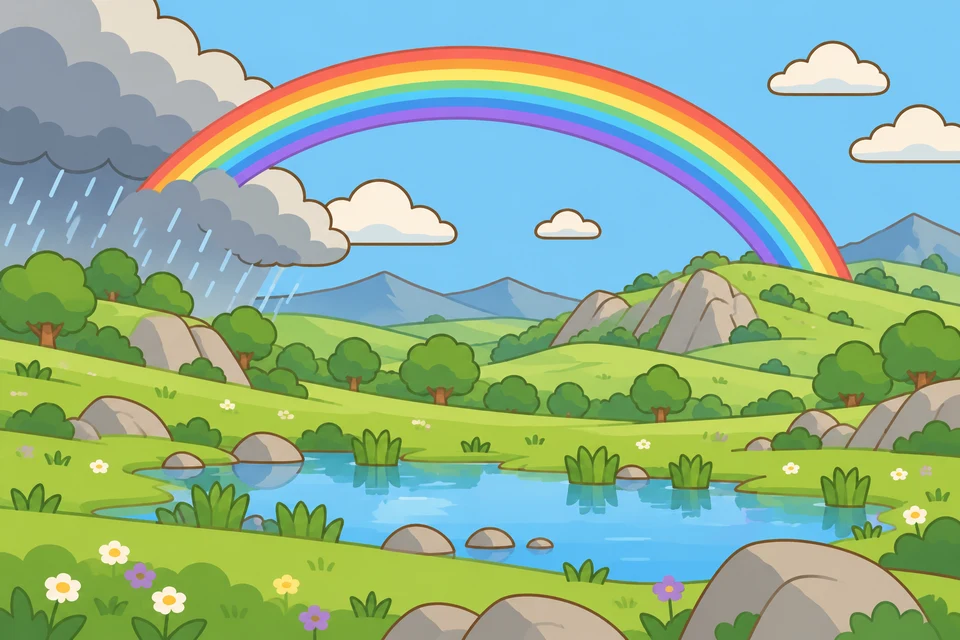
Just after rain, tiny droplets float in the air. Sunlight passing through them splits into seven colours — a rainbow. That is why the sun is always behind you when you see one.
Why is the sun behind you when you see a rainbow? Read more →Science overhead: why the sky is blue, why sunsets glow red, why the Moon changes shape. The sky cards don’t belong to any one island: your child finds them anywhere by looking up at the right time, in the right weather. The blue midday sky, a red sunset, the Moon and stars at night, dew on the grass at dawn, dark clouds before rain, the smell of the ground after it, and the rainbow when the rain stops.
Just after rain, tiny droplets float in the air. Sunlight passing through them splits into seven colours — a rainbow. That is why the sun is always behind you when you see one.
Why is the sun behind you when you see a rainbow? Read more →Sunlight holds every colour. Blue light bumps into the air and scatters much more than red, so it reaches you from all over the sky. That is why a clear sky looks blue.
Why is the sky blue? Read more →In the evening the sun is low, so its light travels through much more air to reach us. Most of the blue is scattered away on the trip, leaving reds and oranges.
Why does the evening sky turn red and orange? Read more →The Moon makes no light of its own; the Sun lights it up. It circles Earth about once a month, and we see more or less of its sunlit side, so it grows from a thin crescent to a full moon and back.
Why does the Moon change shape? Read more →Stars are suns very, very far away. Their light passes through layers of moving air that nudge it this way and that, so they seem to twinkle.
Why do stars twinkle? Read more →On clear nights, grass and leaves cool down. Invisible water vapour in the air touches the cold leaves and turns into tiny droplets: dew. When the sun comes up, it slowly dries away.
Where does morning dew come from? Read more →Clouds are made of countless tiny water droplets. In a very thick cloud, sunlight bounces around so much that most of it goes back out the top, so little reaches the base and it looks grey or dark from below. Rain is often on the way.
Why do rain clouds look grey or dark? Read more →When raindrops land on dry soil, they trap tiny air bubbles that rise and burst, flinging geosmin (made by soil bacteria) and plant oils into the air. That is the fresh, earthy smell after rain.
Why does it smell earthy after rain? Read more →These cards turn up on any island: at the right time, in the right weather, or while your child is planting and digging. Answer the question on the back and the card lights up. The main island and the daily lesson are free, right in the browser.
Start playing ↗