 Mochi Isle
 Ocean currents · Coconut CoveScience for kids
What are ocean currents, and how far can they carry things?
In short: Ocean currents are huge streams of seawater that keep flowing in the same direction, like invisible rivers in the sea. Driven by wind, Earth's spin and differences in temperature and saltiness, they can carry driftwood and coconuts thousands of kilometres.
How it works
Currents at the surface of the ocean are mostly pushed along by winds that blow the same way for much of the year. The wind drags the top layer of water with it. Because Earth is spinning, these streams slowly curve, and they end up flowing in giant loops around the oceans.
There are currents deep down too. Cold, salty water is heavy and sinks, while warmer water is lighter and stays near the top. This sinking and rising keeps water slowly moving between all the world's oceans, like a giant conveyor belt that carries heat from warm places to cold ones.
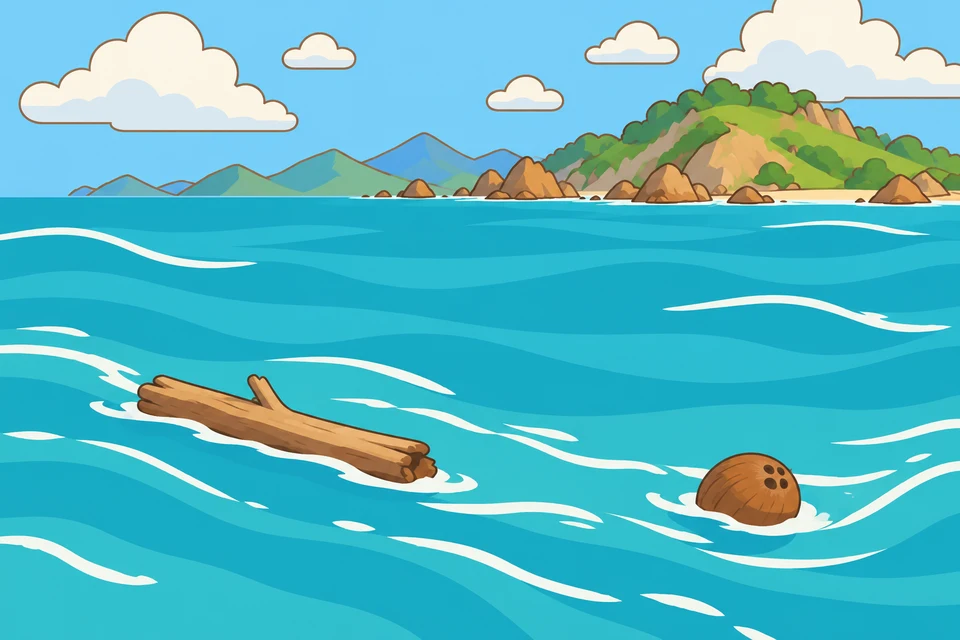
Anything that floats can ride a current: driftwood, coconuts and seeds, and even baby turtles and the tiny young of fish. Scientists also release special floating instruments and follow where they drift, to map the paths that currents take around the world.
Where to see it in New Zealand
New Zealand's longfin eels, or tuna, swim all the way to the tropical Pacific to breed, though the exact spot has never been found. Their babies look like tiny see-through leaves and drift back on ocean currents for months before reaching our river mouths.
Try it together
Fill a large tray with water and sprinkle a little pepper on top. Blow gently and steadily across one side of the water through a straw. Watch the 'wind' push the pepper along, and see how it turns and swirls when it meets the edge.
Kids also ask
Is a rip at the beach an ocean current?
Not quite. A rip is a narrow, fast flow of water near the shore that runs out to sea and can carry swimmers away. Swim between the flags, and if a rip takes you, relax, float and raise your hand for help.
Do ocean currents change the weather?
Yes. Coasts near warm currents tend to be milder and wetter, while those near cold currents are cooler. Currents act like the planet's central heating pipes, spreading warmth around the globe.
In the game, “Ocean currents” is a nature card on Coconut Cove.
Your child finds this card by reaching the right place or meeting the right weather on the island, and lights it up by answering the question on the back. Tap the button below and the game shows your child which island it is on and how to find it. Mochi Isle is a browser learning game for ages 5 to 18; the main island and the daily lesson are free.
Find “Ocean currents” on the island ↗ All cards from Coconut Cove