 Mochi Isle
 Floating coconuts · Coconut CoveScience for kids
How can a coconut float across the sea?
In short: A coconut is wrapped in a thick, light husk of fibres full of air, with a waterproof skin outside, so it can float for months. When it washes up on a new shore it can still sprout, which is why palms line tropical coasts.
How it works
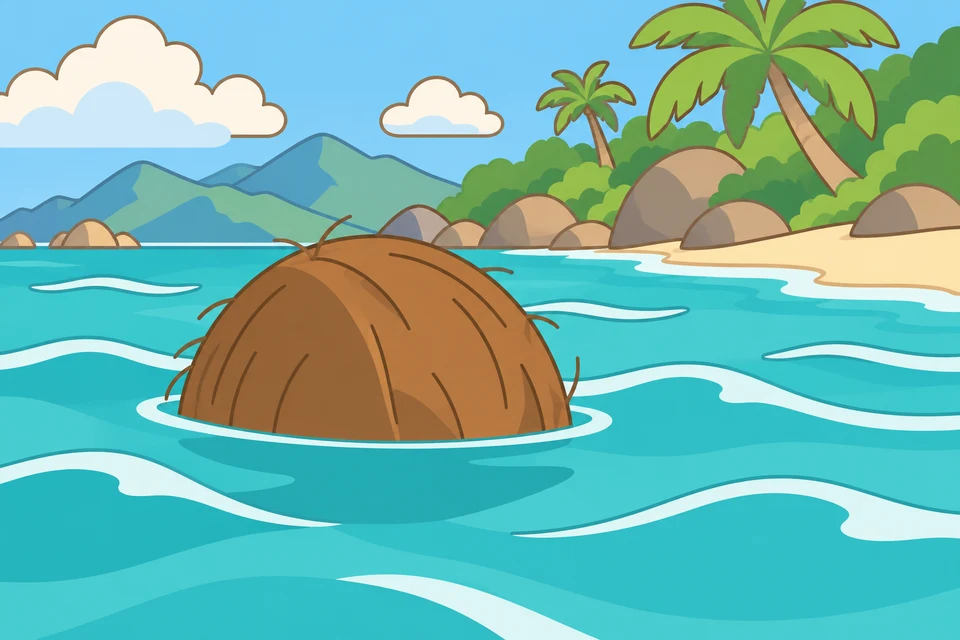
The hairy brown coconut you see in a shop has already had its outer layer removed. A whole coconut has a smooth, waterproof skin, and under it a thick layer of brown fibres with lots of air trapped between them. Like a life jacket, this husk keeps the coconut bobbing on the waves.
The coconut water and white flesh inside are a packed lunch for the seed. When a coconut is washed up on a beach, a shoot pushes out through one of the three 'eyes' on its shell. The young palm feeds on that lunch while it grows roots and settles into the sand.
Waves and currents carried coconuts from island to island. Long ago, people voyaging across the Pacific also took coconuts on their canoes as food and drink for the journey, and planted them on new islands. Together, the sea and people spread coconut palms along tropical coasts.
Where to see it in New Zealand
Coconut palms are not common in New Zealand, but on Pacific islands close to us, such as Samoa, Tonga and the Cook Islands, they line the beaches. New Zealand is too cold for them to grow well. We do have our own native palm, the nīkau, which is one of the southernmost palms in the world.
Try it together
Put an orange with its peel on into a bowl of water and watch it float. Ask an adult to help peel it by hand, then put it back in the water. What happens? Tiny air pockets in orange peel work like the air in a coconut's husk.
Kids also ask
Is a coconut a nut?
Not really. Botanists call it a drupe, the same group as peaches and plums. It has an outer skin and a fleshy or fibrous layer wrapped around a hard stone, and the seed is inside that stone.
Did all coconuts float to their islands?
No. Many drifted on the sea, but many others were carried in canoes and planted by people voyaging across the ocean long ago. People and the sea together spread coconut palms through the tropics.
In the game, “Floating coconuts” is a nature card on Coconut Cove.
Your child finds this card by reaching the right place or meeting the right weather on the island, and lights it up by answering the question on the back. Tap the button below and the game shows your child which island it is on and how to find it. Mochi Isle is a browser learning game for ages 5 to 18; the main island and the daily lesson are free.
Find “Floating coconuts” on the island ↗ All cards from Coconut Cove