 Mochi Isle
 Bay · Coconut CoveScience for kids
What is a bay, and how does it form?
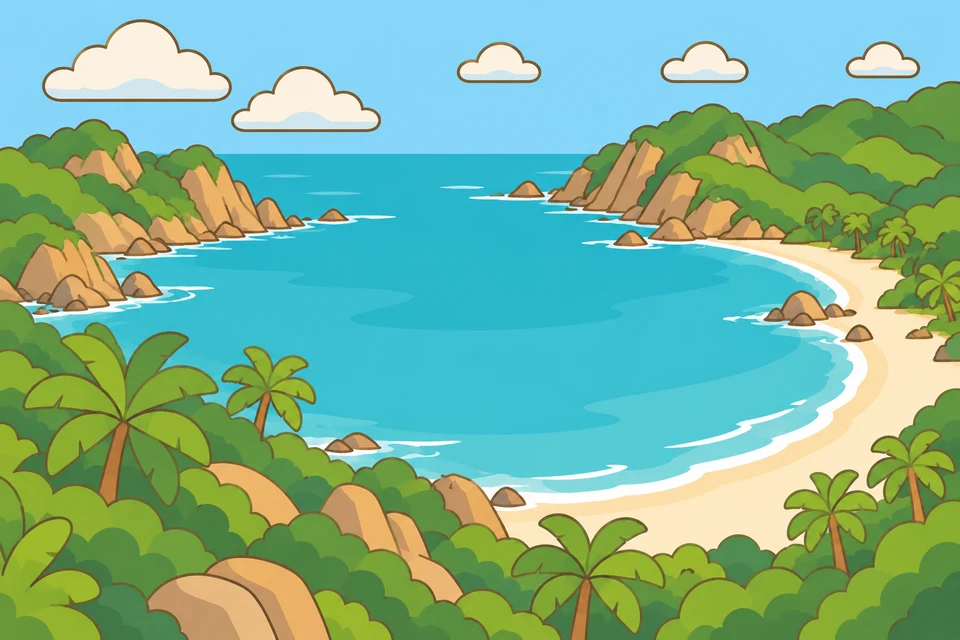
In short: A bay is a part of the sea that reaches into the land, with land on three sides. The land blocks big wind and waves, so the water is calmer, which is why boats shelter there and many harbours are built in bays.
How it works
Coasts are made of soft rock and hard rock. As waves pound the shore, soft rock wears away faster and curves inwards to form a bay. Hard rock wears away slowly and is left sticking out into the sea as headlands, or capes. That is why bays and headlands are often found side by side.
Other bays formed long ago, when the sea level was lower than it is today. As the sea rose, it flooded old river valleys and low ground, pushing fingers of water into the land. These drowned valleys became winding bays and harbours with many arms and inlets.
When waves roll in from the open sea, the land on each side blocks them and they spread out and shrink. Calm water that is deep enough makes a safe place to tie up a boat, so many fishing ports, wharves and cities have grown up around bays.
Where to see it in New Zealand
The Bay of Islands in Northland is one of New Zealand's best-known bays. More than a hundred islands are scattered across its calm water, making it a favourite place for sailing and dolphin watching. In 1840 the Treaty of Waitangi was first signed at Waitangi, on the shores of this bay.
Try it together
In a large tray, make a coastline from sand with a few big stones pressed in as hard rock. Add some water, then gently push waves towards the shore with your hand, again and again. Which parts wear away into bays, and which stick out?
Kids also ask
What is the difference between a bay and a harbour?
A bay is a shape of the coast: sea reaching into the land. A harbour is about use: a sheltered place where ships can safely stop and load. Many harbours sit inside bays, and some are built by people.
Why are waves smaller inside a bay?
As big waves enter a bay, the land on either side blocks them and their energy spreads out, so they get lower. On the same day, the open coast can be rough while the bay next door is calm.
In the game, “Bay” is a nature card on Coconut Cove.
Your child finds this card by reaching the right place or meeting the right weather on the island, and lights it up by answering the question on the back. Tap the button below and the game shows your child which island it is on and how to find it. Mochi Isle is a browser learning game for ages 5 to 18; the main island and the daily lesson are free.
Find “Bay” on the island ↗ All cards from Coconut Cove