 Mochi Isle
 Sundials · Rainbow CloudtopScience for kids
How does a sundial tell the time?
In short: A sundial uses a shadow cast by sunlight. As the Earth spins, the Sun seems to cross the sky from east to west, so the shadow moves and changes length. Where it falls shows the time. Cloudy skies hide the shadow.
How it works
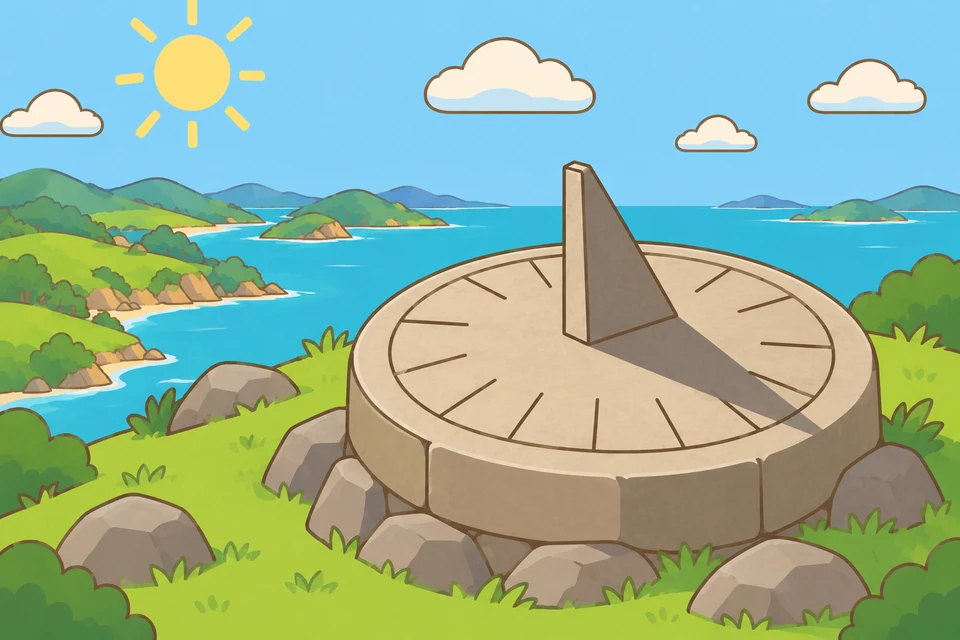
A sundial has a flat face marked with hours and an upright pointer called a gnomon. Sunlight hits the gnomon and casts a shadow onto the face. As Earth turns, the Sun's position in the sky changes and the shadow slowly sweeps around, rather like the hand of a clock.
In the morning the Sun is in the east, so shadows point west and are long. At midday the Sun is highest and shadows are shortest. In the evening the Sun is in the west and shadows stretch east. People in many ancient cultures, including Egypt, China and Rome, used sundials.
A sundial shows solar time, which often differs from clock time by many minutes, and daylight saving adds about another hour. It also needs sunshine: cloudy days, rain and night leave no clear shadow, which is one reason people also used water clocks and sand timers.
Where to see it in New Zealand
New Zealand is in the Southern Hemisphere, so the midday Sun sits in the northern sky and shadows point south. That means a sundial shadow here turns anticlockwise, the opposite of one in the Northern Hemisphere. Clock hands are thought to turn clockwise because they copied northern sundials.
Try it together
On a sunny day, push a stick into the grass, or stand a pencil in playdough on paper. From morning to afternoon, place a pebble at the tip of the shadow every hour and label the time. Which way does it turn, and when is it shortest? Never look at the Sun.
Kids also ask
Why doesn't a sundial match my watch?
A sundial follows the Sun's real position, while clocks use one standard time for a whole time zone. Daylight saving also moves clocks forward an hour, so the two can differ by a few minutes or by more than an hour.
Can you use a sundial at night?
Not an ordinary one, because no sunlight means no shadow. People once used water clocks and sand timers at night or on cloudy days. Moonlight can cast a faint shadow, but the Moon's position shifts each day, so the reading is not accurate.
In the game, “Sundials” is a nature card on Rainbow Cloudtop.
Your child finds this card by reaching the right place or meeting the right weather on the island, and lights it up by answering the question on the back. Tap the button below and the game shows your child which island it is on and how to find it. Mochi Isle is a browser learning game for ages 5 to 18; the main island and the daily lesson are free.
Find “Sundials” on the island ↗ All cards from Rainbow Cloudtop