 Mochi Isle
 Hail · Rainbow CloudtopScience for kids
How does hail form?
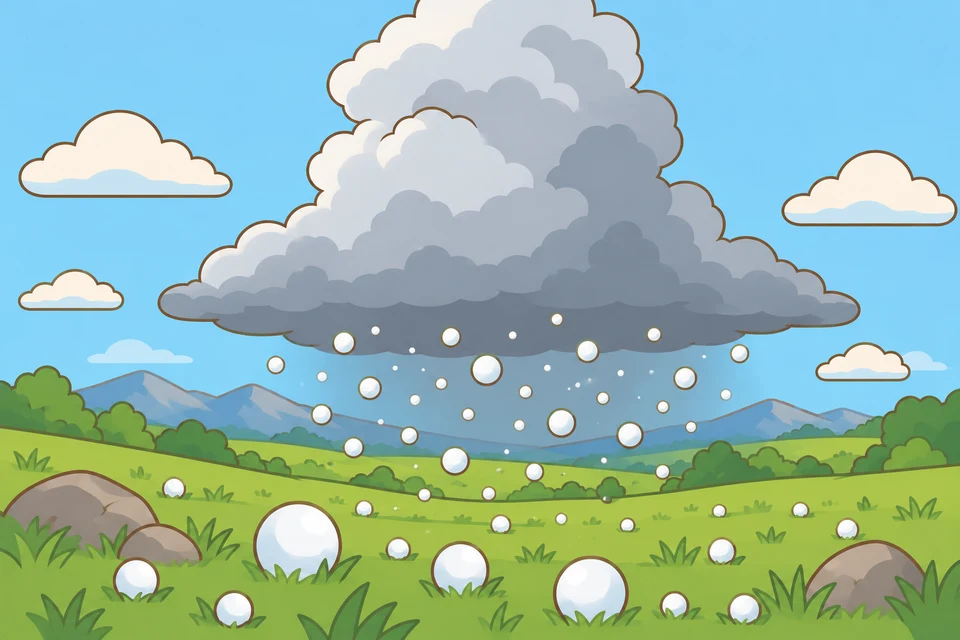
In short: Hail is ice that grows inside tall thunderstorm clouds. Powerful rising air tosses small bits of ice around, coating them again and again with freezing water until they are too heavy to hold up. Hailstones are ice, not stones.
How it works
Hail usually comes from cumulonimbus clouds, the towering thunderstorm clouds with strong updrafts: rising air currents that act like a giant hair dryer blowing upwards. High in the cloud it is well below 0 °C, and there are supercooled droplets, which are water colder than freezing that has not turned to ice yet.
A small ice pellet tossed around by the updraft bumps into these droplets, which freeze onto it instantly, layer after layer. Cut a big hailstone in half and you can often see rings of clear and cloudy ice, like an onion, recording its journey through the cloud.
When a hailstone grows too heavy for the updraft to hold, it falls. Stronger updrafts can hold bigger hailstones. Large hail mostly comes with strong thunderstorms in warmer months, not in the depths of winter. Most hailstones are about the size of a pea or smaller, but severe storms can produce much bigger ones.
Where to see it in New Zealand
New Zealand weather forecasts often mention showers with hail, especially when cold air sweeps up from the south; this hail is usually small. Bigger hail tends to come with strong thunderstorms and can damage crops and orchards, so some growers put hail netting over their fruit trees.
Try it together
Once the hail has stopped and there has been no thunder for a while, ask an adult to help you collect a few hailstones in a cup. Compare their sizes, hold one up to the light to look for rings, and time how long they take to melt. Never go outside while hail is falling.
Kids also ask
What is the difference between hail, snow and ice pellets?
Snow is soft ice crystals that grow slowly into flakes. Hail is hard, layered balls of ice from strong storm clouds, often with thunder. Ice pellets are raindrops that freeze into tiny beads as they fall through cold air.
Why can it hail in summer?
Even on a hot day, the top of a storm cloud several kilometres up is freezing. Hot ground actually makes updrafts stronger, so they can keep ice up in the cloud longer and help hailstones grow bigger.
In the game, “Hail” is a nature card on Rainbow Cloudtop.
Your child finds this card by reaching the right place or meeting the right weather on the island, and lights it up by answering the question on the back. Tap the button below and the game shows your child which island it is on and how to find it. Mochi Isle is a browser learning game for ages 5 to 18; the main island and the daily lesson are free.
Find “Hail” on the island ↗ All cards from Rainbow Cloudtop