 Mochi Isle
 Temperature at height · Rainbow CloudtopScience for kids
Why is it colder higher up?
In short: In the troposphere, the lowest layer of the atmosphere, air usually gets colder as you go up, on average roughly 6 to 7 °C cooler for every 1,000 metres. Weather can upset this pattern, so valleys are sometimes colder than hillsides.
How it works
Much of the sunlight passes through the air and warms the ground first. The warm ground then heats the air right above it, like a heater warming a room. The further you are from that heater, the less warmth reaches you. The troposphere is the lowest layer of air, where almost all our weather happens.
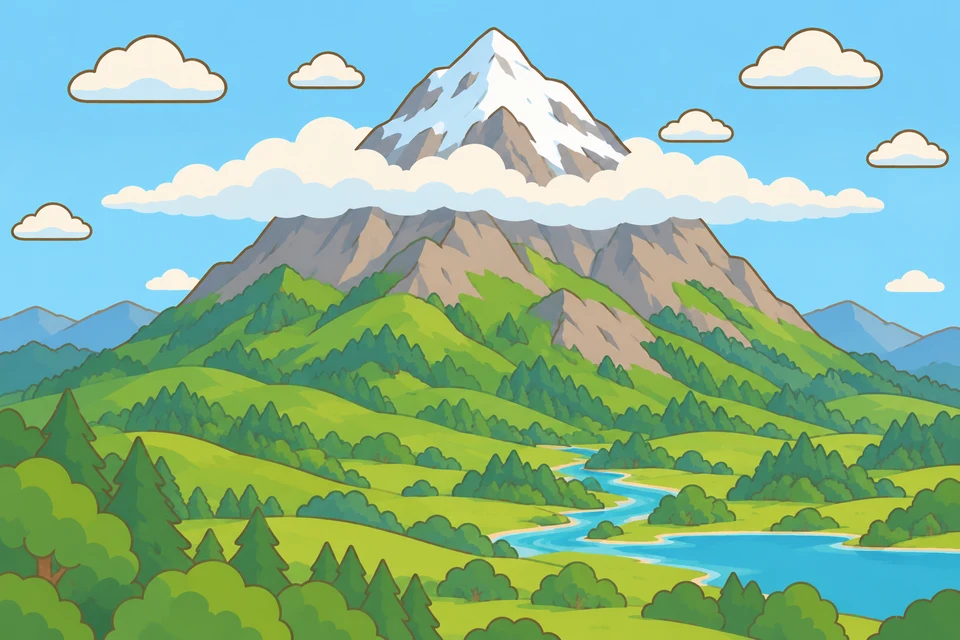
Higher up, the air is thinner and the pressure is lower. When a pocket of air rises, it spreads out, and expanding air cools down. You can feel this when air rushes out of a bike tyre valve: it feels cool. That is why very high mountain tops can stay snowy all year.
There are exceptions. On clear, still nights, cold air is heavier and slides downhill into valleys, so the valley floor can end up colder than slopes higher up. This is called a temperature inversion, and it can trap smoke and fog near the ground.
Where to see it in New Zealand
Drive up Mount Ruapehu towards the ski fields and the temperature drops noticeably; in winter it may be snowing up high while it is only cold rain lower down. On calm, frosty winter nights, Christchurch can get inversions that trap smoke from home fires near the ground as a grey haze.
Try it together
Use a weather app to check two places at the same time: a mountain spot such as a ski field on Mount Ruapehu, and a low-lying town nearby. How many degrees apart are they? Compare that with their difference in height.
Kids also ask
If hot air rises, why is it cold up high?
Warm air does rise, but as it rises it expands and cools down. Also, air is mainly heated by the ground, so the further from the ground you go, the less heat there is.
Does it keep getting colder forever?
No. Above the troposphere, roughly 10 kilometres up in many places, is the stratosphere, where temperature starts rising again because ozone absorbs ultraviolet sunlight. It is still freezing cold for people, though.
In the game, “Temperature at height” is a nature card on Rainbow Cloudtop.
Your child finds this card by reaching the right place or meeting the right weather on the island, and lights it up by answering the question on the back. Tap the button below and the game shows your child which island it is on and how to find it. Mochi Isle is a browser learning game for ages 5 to 18; the main island and the daily lesson are free.
Find “Temperature at height” on the island ↗ All cards from Rainbow Cloudtop