 Mochi Isle
 Tectonic plates · Chimney VolcanoScience for kids
What are tectonic plates?
In short: Earth's hard outer shell is broken into giant pieces, like a jigsaw, called tectonic plates. They move only a few centimetres a year, and where they push together, pull apart or slide past each other, earthquakes and volcanoes are common.
How it works
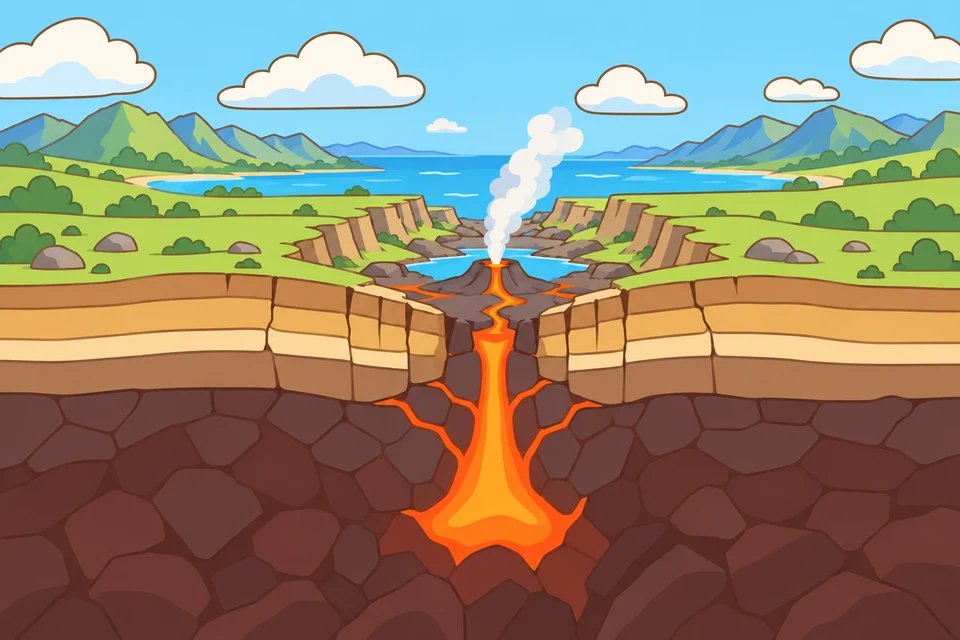
Think of Earth like a boiled egg with a cracked shell. The thin, hard shell is called the lithosphere. Under it is hot, softer rock that can flow very slowly. The shell is cracked into many plates, some carrying continents and some carrying ocean floor, and they ride on the softer rock below.
Plates move about as fast as your fingernails grow. In some places two plates push together, and one dives under the other or the land crumples up into mountains. In other places plates pull apart and magma rises into the gap. Elsewhere, two plates grind sideways past each other.
Plates don't slide smoothly. They often get stuck, and the strain builds up and up. When the rock suddenly breaks and jerks into a new position, the ground shakes. That's an earthquake. Where one plate dives under another, rock can melt and feed volcanoes.
Where to see it in New Zealand
New Zealand sits right on the boundary between the Pacific Plate and the Australian Plate. In the South Island, the plates squeeze and slide along the Alpine Fault, pushing up the Southern Alps. Under the North Island, the Pacific Plate dives beneath the Australian Plate, feeding the volcanoes around Taupō.
Try it together
Put two biscuits side by side on a plate and dip their touching edges in water to soften them. Slowly push them together: the soft edges crumple up like mountains where plates collide. Then slide them sideways past each other and watch what happens to the edges.
Kids also ask
Can we feel the plates moving?
Not normally. They creep along only a few centimetres a year, about as fast as fingernails grow. We only feel it when stuck plates suddenly slip and cause an earthquake.
What should you do in an earthquake?
In New Zealand, people practise Drop, Cover and Hold: drop to the ground, take cover under a sturdy table, and hold on until the shaking stops. Then move carefully to a safe place.
Do continents move too?
Yes. Continents sit on plates and travel with them. Scientists have found that a very long time ago the continents were joined together, and they have slowly drifted apart into the shapes we know today.
In the game, “Tectonic plates” is a nature card on Chimney Volcano.
Your child finds this card by reaching the right place or meeting the right weather on the island, and lights it up by answering the question on the back. Tap the button below and the game shows your child which island it is on and how to find it. Mochi Isle is a browser learning game for ages 5 to 18; the main island and the daily lesson are free.
Find “Tectonic plates” on the island ↗ All cards from Chimney Volcano